
water
The Kingdom, the Baker and Breadmaking
by Linda Rex
Jesus had this way of taking the most everyday tasks and events and turning them into a deeply spiritual concept, especially when he started talking about the kingdom of God. One of those unique parables of Jesus was brought to my attention in a new way this week as I prepared for Sunday’s sermon.
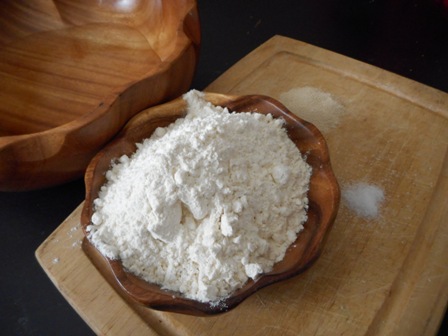
Previously, I hadn’t given much focused thought on the idea that Jesus described God as a baker. And not just a baker, but a woman who baked bread. And she wasn’t a wimpy woman at that—she was able to handle a large amount of dough at once. Three pecks of flour is the equivalent of 16 five-pound bags—enough with about 42 cups of water to make about 101 pounds of dough. That’s a lot of dough!(1)
So, here I see pictured a woman who is doing an everyday task—making bread, and she is physically strong and capable. I like that. How often we women are called on to be physically strong and capable!
I think sometimes that we assume that the Bible and Jesus portray God as being male since most of the language used in relation to him is masculine. But there is a significant difference between human gender and the gender of human language. We have to keep that in mind when we begin to think seriously about the nature of God.
I know that many men are good bakers. In fact, I remember my dad being fond of making unleavened bread. It was something he took up doing late in life that I never expected to find him doing. I tasted some of his products and they were pretty good. But perhaps the culture in Jesus’ day expected a baker to be female—so here God is pictured as a woman.
Breadmaking is something I enjoy doing. In fact, at one point in my life, I started making all our bread by hand because the motion of kneading the dough helped me to heal from an injury to my wrist. It became a therapy that prevented me from having to have surgery. And it worked. And it’s a creative process. I love being creative—I take after the Creator in that way.
But, back to the Breadmaker. The woman with all that flour hides leaven in the flour and it all becomes leavened. One of the simplest recipes I’ve used is for making pizza dough, and it probably resembles pretty closely how bread was made centuries ago. And it got me to thinking about how hiding leaven in flour is related to the kingdom of God.
Most all of the recipes that I can think of for bread start with yeast and water (or milk), a touch of salt and oil. All of that comes first. It is possible that what is meant by leaven in this parable was sourdough starter, which is a small batch of dough that is full of active yeast cultures. Either way, the ingredients that we start bread with—oil, salt, water—along with the yeast, are often used in the Word to describe God, Jesus and the Holy Spirit. This is worth giving meditative thought to.
In fact, I go back to the beginning of the world and find there hovering over the deep waters, the Spirit of God, who when the Word spoke the will of the Father, brought about our existence. God breathed the Breath of life into all that lives and breathes. All the animals and humans breathe oxygen in and carbon dioxide out. It is carbon dioxide that is created when the yeast in bread begins the fermentation process. And this is what causes the dough to rise. Thought-provoking.
Once these leavening ingredients are blended with the flour, there is no separating of them. The leavening process begins to fill the whole wad of dough, especially when the strong, capable baker begins to knead the dough. I’m not even sure she could stop the process once she started. The leaven is an intimate part of the dough, and this becomes evident as the dough begins to rise, and when it is baked into bread.
The kingdom of God is not something that just appeared when Jesus came to earth. For he was in the person of the Word, present in the beginning with the Father and the Spirit when all was made. The purposes and plans of God have not been derailed, but are gradually being kneaded into the dough. In time the heat of the fire will reveal an awesome loaf of bread.
In the meantime though, we find that the dough isn’t always compliant and responsive to the baker. As she pushes the dough down with her hands, the dough pushes back. The working of the dough and its response both positive and negative are a part of the bread-making process.
We tend to think God’s goal right now is to get rid of everything bad in the world. Just slay all these dragons, Lord! But the thing is that God is allowing the evil here for the moment—though he hates what it does to his children—so that he can accomplish the kingdom work he’s trying to do. He’s allowing us to resist him—though it’s foolish to do so—because he knows that it is a part of the free will and growing up process. He’s big enough, clever enough, perfect enough to deal with evil summarily and completely in his own time and way. But he doesn’t always do it right this minute when we think he should.
The baker decides what the end loaf is going to look like. Dough can be used for many things. In fact it can be divided up and used as individual little loafs we call dinner rolls. It can be used as a base for pizza. It can be broiled, boiled and baked as bagels. It can be fried as fritters or sweetened and spiced as cinnamon rolls. Or it can just be made into a plain, old loaf of bread. That’s the baker’s call.
We don’t know what the kingdom of God is going to look like in the end. We’re not really sure what the divine Baker is doing right now or why he is doing it. But one thing is sure—the leaven is filling the whole loaf. And all that God has created shares his Breath of life and participates in his kingdom life. And God’s not going to quit until he has a perfect loaf of bread. I can’t wait to see how it turns out and what it tastes like. I have a feeling it might taste a lot like the bread on Sunday morning’s communion plate.
Holy God, our Heavenly Baker, we are so thankful that you know what you are doing. We’re grateful that we can trust you to do everything necessary to complete the breadmaking process and to bring to pass the fullness of your kingdom. We trust you to finish what you have begun, and we look forward to sharing the bread of heaven with you in eternal communion. In the name of the Father, Son and Spirit. Amen.
”He spoke another parable to them, ‘The kingdom of heaven is like leaven, which a woman took and hid in three pecks of flour until it was all leavened.’” Matt 13:33 NASB
(1) Capon, Robert Farrar. Kingdom, Grace, Judgment: Paradox, Outrage, and Vindication in the Parables of Jesus. Grand Rapids, MI: William B. Eerdmans Publishing Company, 2002. Pg. 100.
Morning Snow
by Linda Rex
This morning I was puttering around, putting the teakettle on the stove so I could have hot water for my morning cup of tea. I glanced out the window and was astonished to see that a heavy snow was falling, just like the snows we used to enjoy back in Iowa. I could not keep this news to myself!
My daughter was still asleep and I wanted so much to wake her up and tell her. I stood outside her door and thought to myself, “It would be such a shame for her to miss this.” It was a struggle to keep quiet about what I had seen especially when I knew she would absolutely love it.
Have you ever felt so compelled to share something that you couldn’t keep quiet about it? It’s like you have a fountain spilling over inside and filling you up to the place you feel like you’re going to explode if you don’t have some way of releasing the pressure. Sometimes it’s a bit of good news that you know everyone is going to love when they hear it and you can’t wait to share it.
When we come to faith in Christ, we are given the blessing of God’s very presence within, with the Presence and power of the Holy Spirit. We experience the wonder and grace of the life and love of the Father, Son and Spirit as we welcome into our hearts and lives Our Savior and Lord Jesus Christ. The Holy Spirit poured into our hearts and lives is a spring of living water that overflows, bringing refreshment and renewal. We find ourselves wanting to tell everyone about it, to share with them the good news of how our lives and hearts have been transformed by God.
The sad thing is that after a while we may get so used to all that water that we become a stagnant pool. Why? Because there is no outlet for all that water. When we keep the life and love of God to ourselves, secure within our own little world and confines of goodness, the fountain begins to lose its freshness.
The good news is that Jesus has promised never to leave us or forsake us. We are assured that when we spend time with him, removing the clutter that has muddied the water for us, and open ourselves up fully to the Holy Spirit, inviting him to fill us, our fountain will again flow freely. Filled with the Spirit, we will be compelled to share what God has given so freely to us. As we share the live and love of the Father, Son and Spirit with those around us, the living water will flow out from us, refreshing others as we are refreshed. And God will smile, for it all begins and ends with him, in Jesus.
Holy God, Fountain of all life and love, refresh us. Renew our hearts and minds, and cause your Spirit to flow freely and fully within us and out from us once again. May we share freely your generous gift in Christ of our participation in your life and love. We thank you and praise for the Living Water you give. In Jesus’ name, we pray. Amen.
“He who believes in Me, as the Scripture said, ‘From his innermost being will flow rivers of living water.’” John 7:38 (NASB)
- ← Previous
- 1
- 2
 Our Life in the Trinity