
Jesus Christ
Reaching for Joy

Advent: JOY
By Linda Rex
This time of year can really be difficult for some people. It seems that the songs we listen to, the Christmas movies we watch and the stories that are told tell about all this lovely holiday joy we should have. And yet, so many of us struggle just to put one foot in front of the other and make it through another day.
I don’t think God expects us to walk around all day, every day, with a big smile on our face. That’s actually kind of creepy, you know. Because it’s not real. God gives us our humanity back renewed in Christ and it’s a humanity that feels things deeply, that sorrows and grieves as much as it laughs and sings for joy.
I read a devotional this morning from New Life Ministries that reminded me the psalms in the Bible are filled with expressions of the whole spectrum of our human existence. There isn’t an emotion there that Christ didn’t feel. It is good to read them and experience God’s heart joining with our heart within the full expression of our humanity.
The psalms tell us that the trees and the animals and all creation sing for joy in praise to God. Over and over we are called to rejoice even in times of persecution and difficult circumstances. If it was left up to us to find the joy to do this, we couldn’t do it. Because, humanly, we tend to allow our situations and struggles to define our emotions rather than the other way around.
But the author of Hebrews tells us that Jesus counted his sufferings—the cross and its shame—as joy. He was able to do so because he looked beyond them to the glory that was to come, not just for him, but for us as well. He went first so that we could follow.
We find our joy in Christ. He lives forever in the divine joy he shares with the Father in the Spirit. He calls us to look beyond this life to the life he purchased for us and gave us in the Holy Spirit. He lives in us today and gives us his joy. He gives us the eyes to see beyond our present circumstances into the kingdom of God he brought in his life, death, resurrection and ascension.
This is why the apostle Paul repeatedly reminded people to keep their eyes on things above, not on earthly things (Col. 3:1-4). We need to keep a spiritual vision of there being so much more to life than this everyday human existence we currently have. Our joy comes from knowing this is not all there is to life. There is somethings very transcendent going on and we get to be a part of it right now.
One of my favorite hymns of joy came to mind this morning. It is a classical piece that causes my heart to overflow with joy as it is sung. It reminds us that our joy comes from beyond us and overflows in our hearts from Christ in the Spirit. It is my prayer for you this holiday season, that you experience God’s divine joy in a profound way through Jesus and by his Spirit. Amen.
Hymn to Joy
Joyful, joyful, we adore Thee, God of glory, Lord of love;
Hearts unfold like flowers before Thee, opening to the sun above.
Melt the clouds of sin and sadness; drive the dark of doubt away;
Giver of immortal gladness, fill us with the light of day!All Thy works with joy surround Thee, earth and heaven reflect Thy rays,
Stars and angels sing around Thee, center of unbroken praise.
Field and forest, vale and mountain, flowery meadow, flashing sea,
Singing bird and flowing fountain call us to rejoice in Thee.Thou art giving and forgiving, ever blessing, ever blessed,
Wellspring of the joy of living, ocean depth of happy rest!
Thou our Father, Christ our Brother, all who live in love are Thine;
Teach us how to love each other, lift us to the joy divine.Mortals, join the happy chorus, which the morning stars began;
Father love is reigning o’er us, brother love binds man to man.
Ever singing, march we onward, victors in the midst of strife,
Joyful music leads us Sunward in the triumph song of life.
Henry J. van Dyke, 1907
Sung to “Hymn to Joy” from Beethoven’s 9th Symphony
“Therefore, since we have so great a cloud of witnesses surrounding us, let us also lay aside every encumbrance and the sin which so easily entangles us, and let us run with endurance the race that is set before us, fixing our eyes on Jesus, the author and perfecter of faith, who for the joy set before Him endured the cross, despising the shame, and has sat down at the right hand of the throne of God. Hebrews 12:1–2 NASB
What Did You Get for Christmas?

by Linda Rex
I was mulling over the Christmas tradition of gift giving and a question came to my mind as to the difference between getting a gift and receiving a gift. Are these two acts the same? Are these expressions synonymous?
It seems that the whole Santa tradition here in America has become more and more a commercial enterprise rather than the fairy tale it started out as. When I hear people talk about Christmas for their kids I hear a lot of anxiety about being able to get the presents their children want and whether or not they will be in hock for months on end because of what they spent on those presents. Some people who are not financially savvy will spend their rent money or bill money on presents for their kids just because they want them to have Christmas (Nevermind that their electricity is turned off for the next three months of winter!).
As a child sits on the mall Santa’s knees the jolly fellow in red and white will ask him or her what the child wants for Christmas. If the child is not too shy, he will receive a litany of hopeful expectations of presents. Whether or not the child will receive those presents, unfortunately (Santa unbeliever that I am) will depend pretty much on the parents’ budget and the thoughtfulness of grandparents and others. The child really doesn’t have a whole lot of control over what is going to show up in his stocking or under the Christmas tree.
Sometimes I think the whole process would be a lot healthier and happier if children and adults alike not only understood the nativity and the gift of the Christ child, but also understood that there is a difference between getting what we want and receiving what is given.
In getting what we want, we are an essential part of the process. We get to decide what we want. We get to decide what’s important to us and what matters most to us. We get to make a list of all the things we think are essential to our life and happiness.
In receiving, we really are not a part of the process at all except in that we reach out and receive what is given. We don’t really have a say in what we receive—we just receive it and make it ours. It becomes essential to us when we receive it in gratitude and put it to use.
In M. Craig Barnes book “Sacred Thirst”, the author tells about the Asian custom of gift giving and receiving that is always done with two hands. He explains that there is a moment in this act of giving when both the giver and the receiver share the gift. He draws upon this image as he reminds us of “the two hands of God”, the incarnate Jesus Christ and the Holy Spirit. In giving us Jesus and the Holy Spirit, God gives us himself. All we are asked to do is to receive with open hands the gift that was and is given.
To receive God through Jesus and in the Spirit means that we need to come with empty hands. We need to shred our Christmas wish list of expectations and receive what God has given with humble thankfulness for God’s grace and generosity. We need to give up our insistence that what’s in the stocking and under the tree is what we think we need to have for our life and happiness. We need to stop eating from the tree of good and evil and start eating from the tree of life.
This is another reason it is a good idea to teach children the story of the coming of God in human flesh in the person of baby Jesus. Santa can also be a fun story to tell, but personally I chose instead to tell the story of Kris Kringle who was generous in heart and gave to the poor children who had nothing and were grateful to receive whatever he gave.
This is a picture of you and me, the spiritually poor and needy, longing to have the deep needs of our heart and soul, as well as our body, fulfilled. We come to God with open hands and hungry souls and he generously gives us all we need for life and godliness.
It also teaches us to reach out to others with all God has given us and to freely fill their empty hands with his love and grace, and whatever other needs we may see. When we toss aside all our preconceptions of what God is doing and will do, and receive full what he is offering—himself in Christ through the Spirit in intimate relationship, moment by moment—we will never be the same. Because we will be living out Christmas all year round.
God has given us himself in Jesus Christ in his life, death, resurrection and ascension, and continues even now to pour himself out to us in the Holy Spirit. We can live as though none of this is true and continue to work to get the things we want and think we need all on our own—trying to fill the thirst of our soul in our own way. Or we can let go of all our expectations and receive the gift God has given—new life in Christ through the Spirit.
May your New Year be full of God’s love, truth and grace!
Thank you, Father, for the beautiful and generous gift you have given us of yourself in Jesus Christ and in the Holy Spirit. Grant us the grace to let go of all the expectations and desires that consume our attention and to receive with open, empty hands your perfect gift. Throughout this new year and into the future, pour into us your new life, hope, joy, and peace. You are all we need. Amen.
“After coming into the house they saw the Child with Mary His mother; and they fell to the ground and worshiped Him. Then, opening their treasures, they presented to Him gifts of gold, frankincense, and myrrh.” Matthew 2:11 NASB
The Kingdom, the Baker and Breadmaking
by Linda Rex
Jesus had this way of taking the most everyday tasks and events and turning them into a deeply spiritual concept, especially when he started talking about the kingdom of God. One of those unique parables of Jesus was brought to my attention in a new way this week as I prepared for Sunday’s sermon.
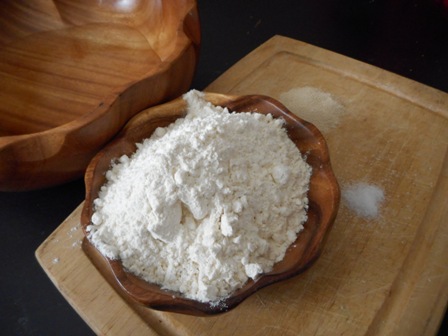
Previously, I hadn’t given much focused thought on the idea that Jesus described God as a baker. And not just a baker, but a woman who baked bread. And she wasn’t a wimpy woman at that—she was able to handle a large amount of dough at once. Three pecks of flour is the equivalent of 16 five-pound bags—enough with about 42 cups of water to make about 101 pounds of dough. That’s a lot of dough!(1)
So, here I see pictured a woman who is doing an everyday task—making bread, and she is physically strong and capable. I like that. How often we women are called on to be physically strong and capable!
I think sometimes that we assume that the Bible and Jesus portray God as being male since most of the language used in relation to him is masculine. But there is a significant difference between human gender and the gender of human language. We have to keep that in mind when we begin to think seriously about the nature of God.
I know that many men are good bakers. In fact, I remember my dad being fond of making unleavened bread. It was something he took up doing late in life that I never expected to find him doing. I tasted some of his products and they were pretty good. But perhaps the culture in Jesus’ day expected a baker to be female—so here God is pictured as a woman.
Breadmaking is something I enjoy doing. In fact, at one point in my life, I started making all our bread by hand because the motion of kneading the dough helped me to heal from an injury to my wrist. It became a therapy that prevented me from having to have surgery. And it worked. And it’s a creative process. I love being creative—I take after the Creator in that way.
But, back to the Breadmaker. The woman with all that flour hides leaven in the flour and it all becomes leavened. One of the simplest recipes I’ve used is for making pizza dough, and it probably resembles pretty closely how bread was made centuries ago. And it got me to thinking about how hiding leaven in flour is related to the kingdom of God.
Most all of the recipes that I can think of for bread start with yeast and water (or milk), a touch of salt and oil. All of that comes first. It is possible that what is meant by leaven in this parable was sourdough starter, which is a small batch of dough that is full of active yeast cultures. Either way, the ingredients that we start bread with—oil, salt, water—along with the yeast, are often used in the Word to describe God, Jesus and the Holy Spirit. This is worth giving meditative thought to.
In fact, I go back to the beginning of the world and find there hovering over the deep waters, the Spirit of God, who when the Word spoke the will of the Father, brought about our existence. God breathed the Breath of life into all that lives and breathes. All the animals and humans breathe oxygen in and carbon dioxide out. It is carbon dioxide that is created when the yeast in bread begins the fermentation process. And this is what causes the dough to rise. Thought-provoking.
Once these leavening ingredients are blended with the flour, there is no separating of them. The leavening process begins to fill the whole wad of dough, especially when the strong, capable baker begins to knead the dough. I’m not even sure she could stop the process once she started. The leaven is an intimate part of the dough, and this becomes evident as the dough begins to rise, and when it is baked into bread.
The kingdom of God is not something that just appeared when Jesus came to earth. For he was in the person of the Word, present in the beginning with the Father and the Spirit when all was made. The purposes and plans of God have not been derailed, but are gradually being kneaded into the dough. In time the heat of the fire will reveal an awesome loaf of bread.
In the meantime though, we find that the dough isn’t always compliant and responsive to the baker. As she pushes the dough down with her hands, the dough pushes back. The working of the dough and its response both positive and negative are a part of the bread-making process.
We tend to think God’s goal right now is to get rid of everything bad in the world. Just slay all these dragons, Lord! But the thing is that God is allowing the evil here for the moment—though he hates what it does to his children—so that he can accomplish the kingdom work he’s trying to do. He’s allowing us to resist him—though it’s foolish to do so—because he knows that it is a part of the free will and growing up process. He’s big enough, clever enough, perfect enough to deal with evil summarily and completely in his own time and way. But he doesn’t always do it right this minute when we think he should.
The baker decides what the end loaf is going to look like. Dough can be used for many things. In fact it can be divided up and used as individual little loafs we call dinner rolls. It can be used as a base for pizza. It can be broiled, boiled and baked as bagels. It can be fried as fritters or sweetened and spiced as cinnamon rolls. Or it can just be made into a plain, old loaf of bread. That’s the baker’s call.
We don’t know what the kingdom of God is going to look like in the end. We’re not really sure what the divine Baker is doing right now or why he is doing it. But one thing is sure—the leaven is filling the whole loaf. And all that God has created shares his Breath of life and participates in his kingdom life. And God’s not going to quit until he has a perfect loaf of bread. I can’t wait to see how it turns out and what it tastes like. I have a feeling it might taste a lot like the bread on Sunday morning’s communion plate.
Holy God, our Heavenly Baker, we are so thankful that you know what you are doing. We’re grateful that we can trust you to do everything necessary to complete the breadmaking process and to bring to pass the fullness of your kingdom. We trust you to finish what you have begun, and we look forward to sharing the bread of heaven with you in eternal communion. In the name of the Father, Son and Spirit. Amen.
”He spoke another parable to them, ‘The kingdom of heaven is like leaven, which a woman took and hid in three pecks of flour until it was all leavened.’” Matt 13:33 NASB
(1) Capon, Robert Farrar. Kingdom, Grace, Judgment: Paradox, Outrage, and Vindication in the Parables of Jesus. Grand Rapids, MI: William B. Eerdmans Publishing Company, 2002. Pg. 100.
The Irrevocable Blessing
by Linda Rex
One of the most unbelievable and amusing Bible stories is the one about the talking donkey and Balaam the seer. As a child I would imagine what it was like for the prophet to be riding along, trying to get his donkey to go where he wanted, even striking him to force him through a narrow passage. And then, all of a sudden, the aggravated donkey started talking: “What have I ever done to you that you have beat me these three times?” What a start that must have given Balaam!
This story from Numbers 22-24 captures the imagination of children and adults alike. But by focusing on the more unbelievable aspects of the story, I think we can miss a fabulous expression of the love and devotion of God to his people and to all humanity that is hidden in these passages.
Balak, the king of Moab, was getting nervous. The huge multitude of Israelites was traveling through the plains near him. The Amorites had attacked them, but they had defeated the Amorites, taking away from them land and cities that had once belonged to the Moabites. Balak feared that his nation would soon be overwhelmed by the Israelites and be defeated as well.
So Balak sent a message to the seer Balaam and requested that he place a curse on the Israelites. Balaam’s reputation was such that the people of his day believed that whoever he cursed would be cursed and whoever he blessed would be blessed. Balaam countered this by saying he could only do what God allowed.
As the story progresses, we see that every time Balaam tried to curse Israel, he ended up pronouncing a blessing over them instead. Balak, of course, was offering Balaam great wealth to do as he asked. But Balaam was unable to curse the nation of Israel. God had determined that Israel would be blessed and not cursed. And no prophet, king or anyone else was going to reverse God’s will.
Finally, after three tries, Balak and Balaam gave up. Israel not only had a blessing declared over her three times, but in the midst of this blessing, God predicted the coming of a scepter rising from Israel—this statement we understand today to be a reference to the coming Messiah.
It was God’s will that Israel be blessed because God had chosen Israel to be his very own people. He was in covenant relationship with them. And one day all people would be blessed through them—this was a promise he made to Abraham, their forefather. God had determined that Israel would be blessed and through them in their Messiah, all humanity would be blessed. And nobody can curse what God has determined to be blessed.
Even though in the future Israel would sin over and over again, turning away from God to the local gods of the nations around them and participating in their sins, God did not revoke his commitment to send a Messiah. He did not stop loving them and working for their ultimate blessing and the blessing of all humanity in Christ.
Israel, and all of humanity for that matter, have rejected God and disobeyed him, yet none of this has annulled our eternal relationship with God in Christ. God in Jesus took on our humanity and joined himself to us forever. Our relationship with God is secure—we are “blessed … in the heavenly realms with every spiritual blessing in Christ” (Eph. 1:3 NIV) God may chasten us as sons (Heb. 12:7 NIV), but his love and blessing do not change. We are reconciled to God in Christ—we live in union with him. It is now a question of fellowship or communion, not union.
We are all God’s children, in Christ. Our badness or goodness does not alter God being for us, with us and in us. It does, however, alter our experience of this reality. When we deny who we are as God’s children, made to reflect his image, and we attempt to live outside the divine life and love, we experience alienation from God. We believe we are outside, excluded from God’s household, when in reality we are included, having been created and renewed in Christ to live in relationship with God and each other. So we experience fear and anxiety instead of God’s love, power, and self-control.
God has included all humanity by making a place for each person at the wedding supper of the Lamb. And he has handed to each person the appropriate wedding garment, Jesus Christ. We can choose to not even show up at the banquet. Or we can refuse to trust in Christ at all and depend solely upon our own ability to put together the perfect wedding ensemble to wear. Or we can choose to put on Christ instead of our old garments of self-justification and carnality and fully experience the joy of the wedding party. God has given us the freedom to choose. What will we trust in? What do we believe to be true about ourselves and about God?
God has determined to bless all humanity and not to curse us. He has determined to bless us with salvation, with an intimate relationship with himself in Christ through the Spirit. All the efforts of the evil one and his cohorts to curse you and me or to destroy that relationship are futile in the face of God’s heart toward us in Christ, which is good. We are all under God’s blessing, not his curse.
And with that being the case, shouldn’t we guard against ever cursing another human being? There ought to only be praise on our lips, for God has determined that they are his chosen ones as well, and they are under his blessing, not his curse. The evil one and our sinful nature may find many ways to lead us into sin, but none of these change the reality that we are reconciled with God in Christ and are held forever in an intimate relationship with him in the Spirit.
Holy God of Glory, God of Israel and of all humanity, I thank you that you have chosen us as your people, and you have done and are doing everything in your power to ensure that all humanity might share in your blessings forever. Renew in each of us a vision of who we are in Christ, and grant us the grace to experience for ourselves and to share with others the wonder of the intimate relationship you have given to us in Jesus Christ. In whose name we pray. Amen.
“He took up his discourse and said, “From Aram Balak has brought me, Moab’s king from the mountains of the East, ‘Come curse Jacob for me, And come, denounce Israel!’ “How shall I curse whom God has not cursed? And how can I denounce whom the LORD has not denounced? … Then he took up his discourse and said, “Arise, O Balak, and hear; Give ear to me, O son of Zippor! “God is not a man, that He should lie, Nor a son of man, that He should repent; Has He said, and will He not do it? Or has He spoken, and will He not make it good? “Behold, I have received a command to bless; When He has blessed, then I cannot revoke it.” … “I see him, but not now; I behold him, but not near; A star shall come forth from Jacob, A scepter shall rise from Israel, And shall crush through the forehead of Moab, And tear down all the sons of Sheth.” Numbers 23:7–8, 18-20; 24:17
“With it we bless our Lord and Father, and with it we curse men, who have been made in the likeness of God; from the same mouth come both blessing and cursing. My brethren, these things ought not to be this way. Does a fountain send out from the same opening both fresh and bitter water? Can a fig tree, my brethren, produce olives, or a vine produce figs? Nor can salt water produce fresh. James 3:9–12
- ← Previous
- 1
- 2
- 3
 Our Life in the Trinity