
kingdom of God
A Warrior’s Heart

By Linda Rex
Yesterday I took my child to Franklin so she could participate in a career assessment. The event included a rather lengthy presentation by two army recruiters, who were doing their best to inspire the teens who were present to join the Army or one of the branches of the military.
From where I was sitting, I could tell that there were a few of the teens, who with the encouragement of their parents, would probably enlist in the near future. Some of them were from military families, who were well acquainted with the rigors of this life.
I reflected back to that morning when I had read about King David in 1 Chronicles 12. I had had one of those epiphanies the Spirit gives sometimes when we are reading the Scriptures. It was something I had not really put together in that way before. Let me share it with you.
David was a simple shepherd boy, the youngest of eight brothers, when the prophet Samuel anointed him king over Israel. God arranged the circumstances in his life so that he served and trained in the presence of King Saul, in the royal court. He became a close friend to Saul’s son Jonathan, and grew into a powerful warrior and leader of Israel’s army. In time, the blessing of God on his life could not be hidden, and Saul’s jealousy drove him to seek to take David’s life.
So then we see David hiding in the wilderness, running from place to place so that he did not need to engage King Saul in battle. He had a couple opportunities to kill the king, but chose not to, choosing instead to let God take care of removing King Saul from office. Eventually King Saul and his sons died during a war with the Philistines.
But even then, David did not take the kingship to himself. His tribe of Judah declared him to be king, but other men wanted Saul’s son Ishbosheth to be king. That, however, did not last long. In time all of Israel turned to David and he became their ruler.
In the centuries after these events, King David was often used by the prophets as an illustration of the coming Messiah who would restore Israel’s glory. What came to my mind yesterday was that King David’s experience in the wilderness is a good illustration of the ministry of God in the world today.
Just as David was anointed by God in his humility to be king and yet lived in obscurity for many years, our Messiah Jesus Christ was born and raised in humble circumstances, living as the Son of God in our humanity and experiencing all aspects of our lives. The evil one sought to destroy him and his work at every turn—and in many ways, like David, Jesus’ real glory as the king of all was hidden in his humanity. Even though he was tempted by Satan to take the throne of the earth on his own terms, he refused to, trusting his Father to bring it to pass in his good time.
In Jesus’ death, resurrection and ascension, he was anointed by the Father to be king of all. And even though Jesus is the real king, right now we live in a world that is ruled by a dark king who acts as though he is still in charge. He seduces, twists people’s minds and hearts, steals all that we cherish and value, lies and deceives, and somehow continues to keep people enthralled by his reign.
But Jesus is the reality of the kingdom of God here on earth, though we do not fully experience that kingdom in all its fullness right now. Through the gift of the Spirit and the calling of the church to bear witness to Jesus Christ, we see God bringing his kingdom into new places and to new people in new ways all the time.
The scriptures call our God a warrior, who, like King David, is assembling a great army against the darkness and evil that exists in the world today. Each of us is like the warriors who came to David and gave themselves to serve him in battle. We are each participating with Jesus in this battle to bring light into dark places.
The good news is that Satan’s rule is over. It is only a matter of time and he will be gone and righteousness, life, and light will truly reign in every part of the cosmos. At that time there will not be any room left for evil or for those who committed themselves to participating in the darkness. At some point, there will only be room for light and life, and God, with his people, will reign in triumphant glory. We anxiously await that day.
But in the meantime, we are at war. Like the mighty men who were equipped for battle, each of us has been equipped by the Holy Spirit with gifts, talents, abilities, experiences and resources to be used in this divine warfare. We have each been placed in certain circumstances around certain people and given opportunities to participate in God’s work in this world to bring light into dark places.
The picture of Jesus on the white horse with his armies following him, is reminiscence of King David with his warriors and raiding bands and armies. And it also is a good picture of God at work even today through Jesus and in the Spirit as he works through people all over the world who are actively bringing life to dead places, light into darkness, hope to despairing people everywhere. Churches, parachurch organizations, food pantries, caregivers, people working to protect and heal the environment—the list goes on. People in every area of life, in every place, are all participating in God’s work to retake this world for Christ.
That leaves one question: Will you join in? I cannot promise that the benefits are superlative. There is a possibility you may suffer and struggle, be wounded in battle, maybe even die. But I can promise you that in the end, you’ll be a whole lot better off than someone who joins the other side—because they’ve already lost the war.
Lord, you are a Mighty Warrior. We are so proud to be a part of your conquering army. Finish what you have begun in us and in our world. We need your kingdom to be fully earthed so that all of life reflects you and your glory. Even so come, Lord Jesus, in every area of life and fully in each of us. In the name the Father, Son and Spirit. Amen.
“For day by day men came to David to help him, until there was a great army alike the army of God.” 1 Chronicles 12:22
“The LORD your God is in your midst, a victorious warrior. He will exult over you with joy, He will be quiet in His love, he will rejoice over you with shouts of joy. Zephaniah 3:17
Oh, To Be Somebody…

by Linda Rex
This morning I was thinking about all the ways we go about trying to find or create our own significance in this world. As we grow up, we want people to notice us, to see that we are somebody. Unless, of course, being invisible is a safer way of being for us.
But this drive to be noticed, to be considered worthwhile, motivates approaches to life and living that are not always healthy and sound-minded. I came across the story of a young man who discovered this power of significance the day he first rode a bull in a rodeo competition. Somehow, being the guy at school who rode the bulls gave him a feeling of self-worth and made him believe he had value he would not have had otherwise. It was only after he began to evaluate the cost in terms of suffering and loss of life that he began to look for other ways to establish his significance.
It is interesting to flip through the channels on the TV and to look at all the shows based on this whole premise—if I’m the best at this then I’ll be somebody—if I do this thing in this unique way, everyone will notice me. Watching one of the newest sitcoms the other day, I realized that the whole concept of a person trying to be somebody, to be noticed, to be approved of, to be a good person, drives so many of the plotlines. It’s just our story as human beings.
And this story is as old as the history of humanity. My morning reading in the Old Testament today was the 15th chapter of Samuel. God had given Israel the king they requested and his name was Saul. He started out a pretty humble man, but in this chapter we find that somehow being significant and important supplanted his humility.
God instructed King Saul to lead the Israelites into battle against a particular king and told him to destroy everything associated with that particular group of people. God wasn’t being cruel—he was just exacting justice and was inviting his people to be a part of that process. (He does that today in a similar way through our armies and police forces, though he typically doesn’t call for genocide any longer.)
In this case, though, the point the writer was making was that King Saul hadn’t grasped the importance of following God’s instructions exactly. He won the battle, but he kept the king alive and brought the best of the cattle and animals, ostensibly for an offering to God. Then he built a memorial to himself. Note: the memorial built was to the king, not to God, the One who had given the king success in battle.
Needless to say, God was ticked, and so was Samuel. In the unpleasant conversation that followed, King Saul was more concerned about the opinion of the people and his significance with them than he was about the reality that he had alienated himself from the God who made him king in the first place.
Sometimes the price we pay for some type of significance and worth and value is too high. Sometimes we lay down our most important relationships in payment for this feeling of importance and power. We give over the only things that in the long run will carry us through eternity—our relationships with God and each other—for the sake of our moment of glory. Is it really worth the price we are willing to pay?
I think it is instructive that Jesus Christ spent the majority of his earthly existence refusing to accept any pats on the back for being the Messiah. Instead he focused on being a servant. Over and over, he reminded his disciples of the inverse values of the kingdom of God: the least are the greatest; the servant will lead; the dead will live; the rejected are those who are most valued by God.
In being God in human flesh, Jesus had every right to expect people to make everything be about him. Yet, instead, he pointed people to his Father. Whatever he did, he did in, with and for his heavenly Father. It wasn’t about him. It was about the will of God.
How clearly Christ demonstrated that our human existence isn’t about us finding some significance in ourselves or in what we do! It’s not about us at all. We don’t find our value and worth in anything we say, think or do. We only find it in God and in his Son, who enveloped our humanity within his own and gave it ultimate significant, worth and value in himself.
So when we live wrapped up in trying to find some value and significance in our own feeble, human way, we will find in the end only emptiness and loss. Human applause and approval are fickle things. They come and go like the weather changes.
But when we surrender this search to the will and purposes of Almighty God, and seek Christ and value his significance and worth, we find that we are cherished, valued and significant ways that really matter. We are God’s treasure. He has every intention to share his life and glory with us in Christ forever. And that’s something worth sacrificing everything for.
Heavenly Father, we confess that too often we make life all about us, and about what others may think or feel about us. Forgive our self-centered, self-seeking ways of being, and grant that, in Jesus, we might live God-centered, other-centered lives instead. Grant us the grace to obey you first and foremost—to surrender our wishes and wills to you, Almighty God, no matter the cost to ourselves. Thank you for the grace you give us, and for your precious Spirit who awakens us to our true value and significance in Christ. Thank you for counting us as precious, valued and significant forever. In Christ, we pray. Amen.
“Then the word of the Lord came to Samuel, saying, ‘I regret that I have made Saul king, for he has turned back from following Me and has not carried out My commands.’ And Samuel was distressed and cried out to the Lord all night.” 1 Samuel 15:10–11
The Kingdom, the Baker and Breadmaking
by Linda Rex
Jesus had this way of taking the most everyday tasks and events and turning them into a deeply spiritual concept, especially when he started talking about the kingdom of God. One of those unique parables of Jesus was brought to my attention in a new way this week as I prepared for Sunday’s sermon.
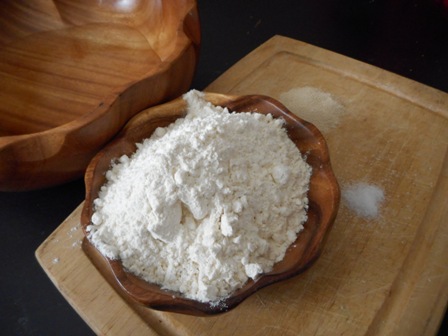
Previously, I hadn’t given much focused thought on the idea that Jesus described God as a baker. And not just a baker, but a woman who baked bread. And she wasn’t a wimpy woman at that—she was able to handle a large amount of dough at once. Three pecks of flour is the equivalent of 16 five-pound bags—enough with about 42 cups of water to make about 101 pounds of dough. That’s a lot of dough!(1)
So, here I see pictured a woman who is doing an everyday task—making bread, and she is physically strong and capable. I like that. How often we women are called on to be physically strong and capable!
I think sometimes that we assume that the Bible and Jesus portray God as being male since most of the language used in relation to him is masculine. But there is a significant difference between human gender and the gender of human language. We have to keep that in mind when we begin to think seriously about the nature of God.
I know that many men are good bakers. In fact, I remember my dad being fond of making unleavened bread. It was something he took up doing late in life that I never expected to find him doing. I tasted some of his products and they were pretty good. But perhaps the culture in Jesus’ day expected a baker to be female—so here God is pictured as a woman.
Breadmaking is something I enjoy doing. In fact, at one point in my life, I started making all our bread by hand because the motion of kneading the dough helped me to heal from an injury to my wrist. It became a therapy that prevented me from having to have surgery. And it worked. And it’s a creative process. I love being creative—I take after the Creator in that way.
But, back to the Breadmaker. The woman with all that flour hides leaven in the flour and it all becomes leavened. One of the simplest recipes I’ve used is for making pizza dough, and it probably resembles pretty closely how bread was made centuries ago. And it got me to thinking about how hiding leaven in flour is related to the kingdom of God.
Most all of the recipes that I can think of for bread start with yeast and water (or milk), a touch of salt and oil. All of that comes first. It is possible that what is meant by leaven in this parable was sourdough starter, which is a small batch of dough that is full of active yeast cultures. Either way, the ingredients that we start bread with—oil, salt, water—along with the yeast, are often used in the Word to describe God, Jesus and the Holy Spirit. This is worth giving meditative thought to.
In fact, I go back to the beginning of the world and find there hovering over the deep waters, the Spirit of God, who when the Word spoke the will of the Father, brought about our existence. God breathed the Breath of life into all that lives and breathes. All the animals and humans breathe oxygen in and carbon dioxide out. It is carbon dioxide that is created when the yeast in bread begins the fermentation process. And this is what causes the dough to rise. Thought-provoking.
Once these leavening ingredients are blended with the flour, there is no separating of them. The leavening process begins to fill the whole wad of dough, especially when the strong, capable baker begins to knead the dough. I’m not even sure she could stop the process once she started. The leaven is an intimate part of the dough, and this becomes evident as the dough begins to rise, and when it is baked into bread.
The kingdom of God is not something that just appeared when Jesus came to earth. For he was in the person of the Word, present in the beginning with the Father and the Spirit when all was made. The purposes and plans of God have not been derailed, but are gradually being kneaded into the dough. In time the heat of the fire will reveal an awesome loaf of bread.
In the meantime though, we find that the dough isn’t always compliant and responsive to the baker. As she pushes the dough down with her hands, the dough pushes back. The working of the dough and its response both positive and negative are a part of the bread-making process.
We tend to think God’s goal right now is to get rid of everything bad in the world. Just slay all these dragons, Lord! But the thing is that God is allowing the evil here for the moment—though he hates what it does to his children—so that he can accomplish the kingdom work he’s trying to do. He’s allowing us to resist him—though it’s foolish to do so—because he knows that it is a part of the free will and growing up process. He’s big enough, clever enough, perfect enough to deal with evil summarily and completely in his own time and way. But he doesn’t always do it right this minute when we think he should.
The baker decides what the end loaf is going to look like. Dough can be used for many things. In fact it can be divided up and used as individual little loafs we call dinner rolls. It can be used as a base for pizza. It can be broiled, boiled and baked as bagels. It can be fried as fritters or sweetened and spiced as cinnamon rolls. Or it can just be made into a plain, old loaf of bread. That’s the baker’s call.
We don’t know what the kingdom of God is going to look like in the end. We’re not really sure what the divine Baker is doing right now or why he is doing it. But one thing is sure—the leaven is filling the whole loaf. And all that God has created shares his Breath of life and participates in his kingdom life. And God’s not going to quit until he has a perfect loaf of bread. I can’t wait to see how it turns out and what it tastes like. I have a feeling it might taste a lot like the bread on Sunday morning’s communion plate.
Holy God, our Heavenly Baker, we are so thankful that you know what you are doing. We’re grateful that we can trust you to do everything necessary to complete the breadmaking process and to bring to pass the fullness of your kingdom. We trust you to finish what you have begun, and we look forward to sharing the bread of heaven with you in eternal communion. In the name of the Father, Son and Spirit. Amen.
”He spoke another parable to them, ‘The kingdom of heaven is like leaven, which a woman took and hid in three pecks of flour until it was all leavened.’” Matt 13:33 NASB
(1) Capon, Robert Farrar. Kingdom, Grace, Judgment: Paradox, Outrage, and Vindication in the Parables of Jesus. Grand Rapids, MI: William B. Eerdmans Publishing Company, 2002. Pg. 100.
Expectancy
by Linda Rex
One of the things that I enjoyed when my children were younger was buying them gifts for a special occasion. Months before the event I would be listening to them as we did things together, trying to see what kind of things they enjoyed and what they might be interested in having. We would walk through a store while I was getting some household items, and I would watch them linger over a toy or game that caught their eye.
I’d watch them plan out the number of chores they would have to do or how much allowance they would have to save up to buy it. Often it would be more than what they could manage immediately. They’d talk about it occasionally, maybe even hint around about it, but for them it was just a dream—their heart’s desire that they couldn’t see their way to achieving.
So it was with much secret delight that I would find a way to purchase the item and wrap it up so I could give it to them on a special occasion. Then I would expectantly look forward to the day when I could watch their face light up with joy as they opened their gift.
Can you imagine with what expectancy God awaits to reveal his Son to us in all his glory? And how he joyfully anticipates the day when you and I along with all his children will be revealed in the full glory he has given us in Jesus Christ—a glory that is already ours, but is for now, hidden with Christ in God? (Col. 3:3-4)
The ascension, which we will celebrate this Sunday, is so significant an event!
Jesus brings each and every one of us into the presence of the Father in the Spirit, so that our redemption is secure. And each and every moment, as a living Lord bearing our humanity, Jesus Christ intercedes for us and intervenes in our lives day by day.
He is actively working, building his temple, the dwelling place of God, even now—working for the day when everything he accomplished in his life, death, resurrection and ascension into glory will be worked out in our human sphere, when his kingdom will be on earth as it is in heaven.
And we get to participate in what he is doing in bringing his kingdom here on earth! We can stand expectantly waiting and doing nothing. Or in our expectant waiting, we can be busy participating in his work of bringing his kingdom to earth.
We can respond to the lead of his Holy Spirit as God shows us ways to love God and love others. God has given each of us a way to participate in what he is doing in the world—let us do it in union and communion with the Father, Son and Spirit and with one another day by day.
And let’s do it in expectant joy! Our ascended King rules even now and is handing us the gift we’ve only dreamed of having. He’s saying to you and to me: “Open it! It’s yours! I bought it, made it, just for you! You’ll love it!”
Thank you, Daddy-God, for the great gift you’ve planned from before time and have prepared for us. You gave everything up so we could have this gift. And you gave us your Son and now you’ve given us your Spirit. We have been given all we need for life and godliness. What a gift! Thank you so much! We receive it with great joy and gratitude. Amen.
“And after He had said these things, He was lifted up while they were looking on, and a cloud received Him out of their sight. And as they were gazing intently into the sky while He was going, behold, two men in white clothing stood beside them. They also said, “Men of Galilee, why do you stand looking into the sky? This Jesus, who has been taken up from you into heaven, will come in just the same way as you have watched Him go into heaven.” Acts 1:9-11
- ← Previous
- 1
- …
- 10
- 11
 Our Life in the Trinity