
live
The Law of the Heart

by Linda Rex
In my last blog I talked about the Ten Commandments and the curses that were to be rehearsed by the Israelites as they entered the Promised Land. My point, in essence, was that God was once again renewing his covenant love commitment to Israel and was calling them to love him wholeheartedly in return. This covenant love relationship was to supersede all the rules and regulations given to Israel that were meant to keep them within the bounds of that love.
It is interesting that God was quite frank with the Israelites when he told them that they weren’t going to be faithful to him because they were a stubborn, willful people. He predicted that they would be unfaithful to him, and that even though they were the most blessed people in the world because they had him for a covenant partner, he knew they would still choose to worship the gods of the nations around him instead. God wasn’t fooled by Israel’s empty promises.
And indeed, the nation of Israel over the centuries repeatedly denied the God who redeemed them and chose to suffer the painful consequences of that rejection and rebellion. In time they ended up exiled as God predicted would happen and the Promised Land was overrun by other nations.
But in this prediction of the future of Israel, God also pointed to a time after the exile—a time of repentance, of a change of mind and heart. He predicted that one day, he would “circumcise the heart” of the nation and its descendants so that they would love him with all their heart and all their soul so that they would seek life. He told them that the commandment, to love God wholeheartedly, was not external to them nor was it beyond their reach. Rather it would be in their mouth and in their heart.
The apostle Paul takes this up in Romans 10:4-13 when he contrasts righteousness through the law with the righteousness which is by faith:
“For Christ is the end of the law for righteousness to everyone who believes. For Moses writes that the man who practices the righteousness which is based on law shall live by that righteousness. But the righteousness based on faith speaks as follows: “DO NOT SAY IN YOUR HEART, ‘WHO WILL ASCEND INTO HEAVEN?’ (that is, to bring Christ down), or ‘WHO WILL DESCEND INTO THE ABYSS?’ (that is, to bring Christ up from the dead).” But what does it say? “THE WORD IS NEAR YOU, IN YOUR MOUTH AND IN YOUR HEART”—that is, the word of faith which we are preaching, that if you confess with your mouth Jesus as Lord, and believe in your heart that God raised Him from the dead, you will be saved; for with the heart a person believes, resulting in righteousness, and with the mouth he confesses, resulting in salvation. For the Scripture says, “WHOEVER BELIEVES IN HIM WILL NOT BE DISAPPOINTED.” For there is no distinction between Jew and Greek; for the same Lord is Lord of call, abounding in riches for all who call on Him; for “WHOEVER WILL CALL ON THE NAME OF THE LORD WILL BE SAVED.” (NASB)
He shows that in Christ there is a change at the heart level which involves faith, something that the ancient Israelites failed to have in their covenant relationship with God. They did not believe, therefore they did not obey. They did not believe God and trust in the depth of his love for them, so often they chose to work things out themselves or to rely on other nations or other ways of living and worshiping.
We are reminded by Paul that when God told Abraham he was going to bless him and give him many descendants, Abraham believed him. And God counted that as his righteousness. Abraham trusted that God would keep his word, even when it seemed that there was no hope of it working out the way he said. Thus, God declared Abraham to be in right relationship with him. (Rom. 4:19-22) This is the essence of the love relationship God wants with each of us—to know him to be the loving, faithful God he really is and to trust him completely—to trust God’s love in spite of what we may see, think, or experience to the contrary.
God went out of his way to demonstrate his love for us in coming as the Living Word in human flesh. Jesus Christ lived out the perfection of his divinity within the corruption of human flesh, moment by moment working out our salvation in every situation and circumstance of his human existence. Then he died and rose again. His ascension is key to this whole thing—because in his ascension, he sent from the Father the Blessed Holy Spirit to live in human hearts. This was the circumcision first spoken about by Moses and confirmed by Jesus Christ.
This is the “mystery of godliness” Paul talks about in his letters. It is Jesus Christ, and therefore the Father, living in our hearts by the Holy Spirit. In this way we all have a new existence. The people of Israel, as well as all people everywhere, have been given freedom from the confines of the external law because now we have the Law, the living Word, written on human hearts. The external law now takes its rightful place as a pointer to the One who transforms human hearts from the inside out. We have been given a right relationship God where it’s no longer a matter of judgment but rather a matter of grace.
Now God calls us out of this relationship we’ve imagined is based on do’s and don’t’s into a relationship he forged based solely on his love and his grace. He has placed his divine Word, his Law, within human hearts. We are guided and led by his Holy Spirit. We don’t get to call the shots anymore. We don’t get to try to work this out ourselves. He’s already done it all—he just calls us to accept it and enjoy it. He just asks us to believe it and receive it—to enjoy the marvelous thing he has done in bringing us back together with him again.
Like a lover wooing his wandering bride, God has removed all the barriers that we can possibly put between him and us as his people. We can’t use our nationality, our race, our wealth or poverty, our knowledge or ignorance, our human wretchedness, or anything else as an excuse for not surrendering to the blessings and wonder of a life lived in the presence of and to the glory of the God who truly and forever loves us and will not be God without us. All that’s left for us to do is to capitulate—to surrender unconditionally to the love and grace of God. Question is—will we do that?
Father, we praise you that in your steadfast love, you have given us a new heart and soul through the Word written on our human hearts and minds. And that by your Holy Spirit you awaken each of us to new life—life lived daily in your presence. Finish your great work of transformation in each of us—we surrender to your perfect will and your love. For Jesus’ sake. Amen.
“Moreover the LORD your God will circumcise your heart and the heart of your descendants, to love the LORD your God with all your heart and with all your soul, so that you may live. …For this commandment which I command you today is not too difficult for you, nor is it out of reach. It is not in heaven, that you should say, ‘Who will go up to heaven for us to get it for us and make us hear it, that we may observe it?’ Nor is it beyond the sea, that you should say, ‘Who will cross the sea for us to get it for us and make us hear it, that we may observe it?’ But the word is very near you, in your mouth and in your heart, that you may observe it.” Deut. 30:6, 11–14
The Curses and The Ten Commandments
by Linda Rex
Lately I’ve been starting out my day reading a chapter from the Old Testament and a chapter from the New Testament. Today I was reading Chapter 27 in the book of Deuteronomy. Here Moses instructed the people about something they were to do when they entered the Promised Land. They were to divide the people up, with six tribes standing on Mount Gerizim and six tribes standing on Mount Ebal. Then the Levites were to recite curses and all the people were to respond with “Amen” to each curse.
Something occurred to me as I was reading this. It was something I never played close attention to when I read it before. And it really bugged me—enough that I had to stop and think seriously about it for a while.
If I were to ask you what many traditional and fundamentalist Christians have posted in their house or office somewhere, what would you say? I was in someone’s office the other day, and there it was, in bold print, so everyone who came in couldn’t miss it. Many Christians insist that the Ten Commandments are the trademark measurement of goodness and badness and what matters most to God in our relationship with him. So they post them where they and others can see them.
That being the case, I was stunned to see that nowhere in this list of sins these curses were for, were the Ten Commandments specifically listed. There wasn’t mention of a single commandment in relation to God and how the people were to relate to him. The others were related to some of the other six commandments, but they didn’t at all appear in the form you would see in Exodus 20 or Deuteronomy 5 where the Ten Commandments are listed.
If the Ten Commandments were so important for the people to be keeping, why weren’t they listed with the curses? And I found that it is interesting in the same respect that each of these things listed had to do with proper relationships between people, both in the family and in the community. The last one in the list was a summary statement pronouncing a curse on anyone who did not uphold the words of the law.
Then a blessing is pronounced in Chapter 28 and it has everything to do with Israel’s relationship with God and how they participated in their covenant of love with him. The blessings and cursings described in Chapter 28 are related to the way Israel behaved in their relationship with God and whether or not they lived in communion with him as the law instructed them to. The blessings and curses had to do with whether or not Israel as a nation trusted in God alone and was faithful to their covenant relationship with him.
In both of these cases, the Ten Commandments was supplanted to some extent, or shall I say, surpassed by, the greater law of covenant love. Our relationships with God and with each other are what really matter in the end. The consequence of living for ourselves and not living in communion and godly love with one another and God is well described in this listing of curses. And the blessings that come with living in the communion of the Holy Spirit with one another is clear to see as well. It explains why Jesus, when asked, said the most important commandment is to love God with one’s whole heart, soul, mind and being, and the second is to love our neighbor as ourselves.
Instead of seeing the law as a list of do’s and don’t’s that separate good people from bad people, we can see the law as an expression of what it looks like to live in loving relationship with God and each other. The simplicity of this is expressed in the NASB when it says that the people were to confirm the words of the law by the way in which they lived. We confirm our love relationship with God and each other by the way we treat God and each other, and by what goes on in our hearts and minds in each moment of each day as we interact with the world around us.
Going on beyond this, we are told by the Apostle Paul that “Christ redeemed us from the curse of the Law, having become a curse for us…” (Gal. 3:13) So even our shortcomings in living out a relationship of love with God and each other are covered by our Savior. The prophetic word of Isaiah to Israel was that God would author a new covenant in which he said he would “put My law within them and on their heart I will write it; and I will be their God, and they shall be My people” (Jer. 31:33). This is reflected on by the author of Hebrews, who explains the gift of God is the internal eternal Law of God, Jesus Christ, who has joined himself with humanity and who stands in our place as both the Lawgiver and the Lawkeeper.
Now I’m not against people posting the Ten Commandments places as a reminder of how to treat God and each other. That can be a good thing. But it is easy to hold to this external expression of goodness and badness by which we judge one another and to totally miss the mystery of godliness—Christ in us, the hope of glory. It is Christ who defines us, who lives his life in us and through us by his Holy Spirit. It is God who plants within us the heart, soul and mind to love him and each other from the core of our being with his own very own love, planted within us through Jesus Christ in the Spirit.
How often I have encountered people who are very busy with the externals of Christianity, but who are also vindictive, hateful, spiteful and even cruel—because the law has become to them a dividing point between goodness and badness between them and other people, and they have missed the One who gives Life and offers us an intimate relationship with himself through Christ in the communion of the Holy Spirit.
They are eating of the tree of good and evil and have missed entirely the tree of life offered us in Jesus’ life, death, resurrection and ascension. This seems to me to be the worst possible thing that could happen to anyone. And all these curses described in Deuteronomy cannot begin to describe what it’s like to live out one’s life in rejection of the One who is our life, our love, our obedience, our peace. That seems to me to describe in many ways what a personal hell looks like.
Dearest God, Thank you for giving us your Son so that we can live in loving relationship with you and each other. Thank you for your precious Spirit who opens our eyes and minds and hearts to see Jesus Christ living within, and who makes us receptive to the Truth and Life he is. Grant us the grace to seek Life in Jesus Christ instead of seeking to be our own gods and to live independently of you and each other. We trust you will finish your work in our hearts, minds and lives, through Jesus Christ. Amen.
“’Cursed is he who does not confirm the words of this law by doing them.’ And all the people shall say, ‘Amen.’” Deut. 27:26 NASB
“Jesus answered, ‘The foremost is, “HEAR, O ISRAEL! THE LORD OUR GOD IS ONE LORD; AND YOU SHALL LOVE THE LORD YOUR GOD WITH ALL YOUR HEART, AND WITH ALL YOUR SOUL, AND WITH ALL YOUR MIND, AND WITH ALL YOUR STRENGTH.” The second is this, “YOU SHALL LOVE YOUR NEIGHBOR AS YOURSELF.” There is no other commandment greater than these.’” Mark 12:29–31 NASB
You are Enough as You Are
by Linda Rex
Last night I was at a sub shop exploring the pages of Karl Barth’s “Church Dogmatics” and I overheard a young lady in the booth behind me informing a couple new employees of company policy. Having performed that routine myself in my previous employment as a human resources director, I found it amusing to inadvertently hear her slam the company’s policy against profanity. Apparently the opinion of the two young women she was instructing was more important to her than the preferences of the owner of the business.
At that particular point I had been reading what Barth had to say about spiritual gifts and service within and without the church. Barth emphasized that the new life God has given us in Christ includes all of life, not just the going-to-church parts of life. When we recognize who we are in Christ, it impacts how we think, live, talk, and relate to others. Having Christ and therefore the Father living within via the Holy Spirit means that all of our human existence is taken up and made sacred, holy, and should be committed to God’s purposes. This includes telling a new employee what the company’s expectations are.
Some of us focus on learning what our gifts are and strive to be putting them to use in God’s service. Others of us are still struggling to figure out if we even have any gifts to offer in this way. But what God is helping me to see is that just finding and offering my gifts is not all that God has in mind for me. Indeed, he is looking for something a little deeper.
Truly, to seek to know God not only as Father, but as the indwelling Christ, is a lifelong process. It takes time and experience to come to know and recognize the voice of God in the Spirit, and to obey Jesus as he leads us in a real and personal way moment by moment. This being led by and filled with the Spirit is a challenging process, to say the least.
And it’s all of grace. For I realize again and again that God speaks and too often I am preoccupied with my own concerns, or too busy, or I miss the cues he is giving in showing me where to go and what to do. I don’t always see with his eyes, even though he gives me the eyes of the Spirit. I don’t always hear with his ears even though so often the Father is speaking—through other people, through events in my life, through the book I’m reading or the movie I’m watching. If I were alert to all the ways God is interacting with me moment by moment, I think I would be overwhelmed. I am so very grateful that God is gracious and kind!
So the result of that little episode in the sub shop was that I once again saw that I need to take some time for silence and solitude to hear the Word of God to me. What gifts, abilities, and skills has God placed within me and how does he want me to use them in this season and situation in my life? But more than that, I need to quit apologizing for who he has created me to be and start fully using what God has poured out on me. I need to quit caring so much about the opinions of others and place as first priority the will and sovereignty of God and the full expression of the Christ within by the Holy Spirit.
And that’s tough. Not only does it involve a letting go, but it also involves a grabbing hold of life and making full investment of all that I am as a human being in the things that really matter. I can’t afford to be a part-time, half-hearted Christian any longer. I can’t let other people decide for me what I am to do with my time, energy and efforts. That’s what Christ meant when he said “Follow me.” It’s his call, not theirs or mine.
Jesus told the man who wanted to go home to bury his father “Let the dead bury the dead.” Christ is calling us into a priority relationship that involves giving all of life to him, even if that means giving him preferential treatment in comparison to our relationships with those near and dear to us. To give one’s life as a “living sacrifice” means that there is a laying down of all that matters most to us so that, in Christ, we can receive it all back in a new way in his kingdom life.
Who we are in Christ is enough. We don’t have to reach any other standard. Christ is the standard we are to meet and he has met this standard for us in taking on our humanity in the incarnation through his life, death, resurrection and ascension. In the gift of the Spirit, he invests himself in us. And so, we are enough, in him, for whatever we may face in our lives.
But let’s you and me be a full expression of Christ, not just a brief glimpse. Let’s respond fully to the Spirit and let him transform us—transfigure us—conform us to the image of Christ. Because this is what God wants for you and for me.
Lord, thank you that you have given us yourself by the Spirit so that we can be a full expression of you in your life and love. Thank you for your grace through which we are able to grow up in you and become all that you have in mind for us. For it is only through you, by you and in you that this is possible. In your name, we pray. Amen.
“I’m speaking to you out of deep gratitude for all that God has given me, and especially as I have responsibilities in relation to you. Living then, as every one of you does, in pure grace, it’s important that you not misinterpret yourselves as people who are bringing this goodness to God. No, God brings it all to you. The only accurate way to understand ourselves is by what God is and by what he does for us, not by what we are and what we do for him….So since we find ourselves fashioned into all these excellently formed and marvelously functioning parts in Christ’s body, let’s just go ahead and be what we were made to be, without enviously or pridefully comparing ourselves with each other, or trying to be something we aren’t.” Romans 12:3, 6 MSG
The Kingdom, the Baker and Breadmaking
by Linda Rex
Jesus had this way of taking the most everyday tasks and events and turning them into a deeply spiritual concept, especially when he started talking about the kingdom of God. One of those unique parables of Jesus was brought to my attention in a new way this week as I prepared for Sunday’s sermon.
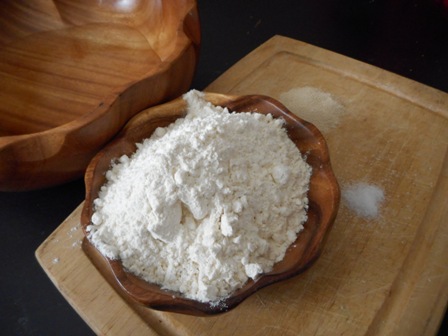
Previously, I hadn’t given much focused thought on the idea that Jesus described God as a baker. And not just a baker, but a woman who baked bread. And she wasn’t a wimpy woman at that—she was able to handle a large amount of dough at once. Three pecks of flour is the equivalent of 16 five-pound bags—enough with about 42 cups of water to make about 101 pounds of dough. That’s a lot of dough!(1)
So, here I see pictured a woman who is doing an everyday task—making bread, and she is physically strong and capable. I like that. How often we women are called on to be physically strong and capable!
I think sometimes that we assume that the Bible and Jesus portray God as being male since most of the language used in relation to him is masculine. But there is a significant difference between human gender and the gender of human language. We have to keep that in mind when we begin to think seriously about the nature of God.
I know that many men are good bakers. In fact, I remember my dad being fond of making unleavened bread. It was something he took up doing late in life that I never expected to find him doing. I tasted some of his products and they were pretty good. But perhaps the culture in Jesus’ day expected a baker to be female—so here God is pictured as a woman.
Breadmaking is something I enjoy doing. In fact, at one point in my life, I started making all our bread by hand because the motion of kneading the dough helped me to heal from an injury to my wrist. It became a therapy that prevented me from having to have surgery. And it worked. And it’s a creative process. I love being creative—I take after the Creator in that way.
But, back to the Breadmaker. The woman with all that flour hides leaven in the flour and it all becomes leavened. One of the simplest recipes I’ve used is for making pizza dough, and it probably resembles pretty closely how bread was made centuries ago. And it got me to thinking about how hiding leaven in flour is related to the kingdom of God.
Most all of the recipes that I can think of for bread start with yeast and water (or milk), a touch of salt and oil. All of that comes first. It is possible that what is meant by leaven in this parable was sourdough starter, which is a small batch of dough that is full of active yeast cultures. Either way, the ingredients that we start bread with—oil, salt, water—along with the yeast, are often used in the Word to describe God, Jesus and the Holy Spirit. This is worth giving meditative thought to.
In fact, I go back to the beginning of the world and find there hovering over the deep waters, the Spirit of God, who when the Word spoke the will of the Father, brought about our existence. God breathed the Breath of life into all that lives and breathes. All the animals and humans breathe oxygen in and carbon dioxide out. It is carbon dioxide that is created when the yeast in bread begins the fermentation process. And this is what causes the dough to rise. Thought-provoking.
Once these leavening ingredients are blended with the flour, there is no separating of them. The leavening process begins to fill the whole wad of dough, especially when the strong, capable baker begins to knead the dough. I’m not even sure she could stop the process once she started. The leaven is an intimate part of the dough, and this becomes evident as the dough begins to rise, and when it is baked into bread.
The kingdom of God is not something that just appeared when Jesus came to earth. For he was in the person of the Word, present in the beginning with the Father and the Spirit when all was made. The purposes and plans of God have not been derailed, but are gradually being kneaded into the dough. In time the heat of the fire will reveal an awesome loaf of bread.
In the meantime though, we find that the dough isn’t always compliant and responsive to the baker. As she pushes the dough down with her hands, the dough pushes back. The working of the dough and its response both positive and negative are a part of the bread-making process.
We tend to think God’s goal right now is to get rid of everything bad in the world. Just slay all these dragons, Lord! But the thing is that God is allowing the evil here for the moment—though he hates what it does to his children—so that he can accomplish the kingdom work he’s trying to do. He’s allowing us to resist him—though it’s foolish to do so—because he knows that it is a part of the free will and growing up process. He’s big enough, clever enough, perfect enough to deal with evil summarily and completely in his own time and way. But he doesn’t always do it right this minute when we think he should.
The baker decides what the end loaf is going to look like. Dough can be used for many things. In fact it can be divided up and used as individual little loafs we call dinner rolls. It can be used as a base for pizza. It can be broiled, boiled and baked as bagels. It can be fried as fritters or sweetened and spiced as cinnamon rolls. Or it can just be made into a plain, old loaf of bread. That’s the baker’s call.
We don’t know what the kingdom of God is going to look like in the end. We’re not really sure what the divine Baker is doing right now or why he is doing it. But one thing is sure—the leaven is filling the whole loaf. And all that God has created shares his Breath of life and participates in his kingdom life. And God’s not going to quit until he has a perfect loaf of bread. I can’t wait to see how it turns out and what it tastes like. I have a feeling it might taste a lot like the bread on Sunday morning’s communion plate.
Holy God, our Heavenly Baker, we are so thankful that you know what you are doing. We’re grateful that we can trust you to do everything necessary to complete the breadmaking process and to bring to pass the fullness of your kingdom. We trust you to finish what you have begun, and we look forward to sharing the bread of heaven with you in eternal communion. In the name of the Father, Son and Spirit. Amen.
”He spoke another parable to them, ‘The kingdom of heaven is like leaven, which a woman took and hid in three pecks of flour until it was all leavened.’” Matt 13:33 NASB
(1) Capon, Robert Farrar. Kingdom, Grace, Judgment: Paradox, Outrage, and Vindication in the Parables of Jesus. Grand Rapids, MI: William B. Eerdmans Publishing Company, 2002. Pg. 100.
The Irrevocable Blessing
by Linda Rex
One of the most unbelievable and amusing Bible stories is the one about the talking donkey and Balaam the seer. As a child I would imagine what it was like for the prophet to be riding along, trying to get his donkey to go where he wanted, even striking him to force him through a narrow passage. And then, all of a sudden, the aggravated donkey started talking: “What have I ever done to you that you have beat me these three times?” What a start that must have given Balaam!
This story from Numbers 22-24 captures the imagination of children and adults alike. But by focusing on the more unbelievable aspects of the story, I think we can miss a fabulous expression of the love and devotion of God to his people and to all humanity that is hidden in these passages.
Balak, the king of Moab, was getting nervous. The huge multitude of Israelites was traveling through the plains near him. The Amorites had attacked them, but they had defeated the Amorites, taking away from them land and cities that had once belonged to the Moabites. Balak feared that his nation would soon be overwhelmed by the Israelites and be defeated as well.
So Balak sent a message to the seer Balaam and requested that he place a curse on the Israelites. Balaam’s reputation was such that the people of his day believed that whoever he cursed would be cursed and whoever he blessed would be blessed. Balaam countered this by saying he could only do what God allowed.
As the story progresses, we see that every time Balaam tried to curse Israel, he ended up pronouncing a blessing over them instead. Balak, of course, was offering Balaam great wealth to do as he asked. But Balaam was unable to curse the nation of Israel. God had determined that Israel would be blessed and not cursed. And no prophet, king or anyone else was going to reverse God’s will.
Finally, after three tries, Balak and Balaam gave up. Israel not only had a blessing declared over her three times, but in the midst of this blessing, God predicted the coming of a scepter rising from Israel—this statement we understand today to be a reference to the coming Messiah.
It was God’s will that Israel be blessed because God had chosen Israel to be his very own people. He was in covenant relationship with them. And one day all people would be blessed through them—this was a promise he made to Abraham, their forefather. God had determined that Israel would be blessed and through them in their Messiah, all humanity would be blessed. And nobody can curse what God has determined to be blessed.
Even though in the future Israel would sin over and over again, turning away from God to the local gods of the nations around them and participating in their sins, God did not revoke his commitment to send a Messiah. He did not stop loving them and working for their ultimate blessing and the blessing of all humanity in Christ.
Israel, and all of humanity for that matter, have rejected God and disobeyed him, yet none of this has annulled our eternal relationship with God in Christ. God in Jesus took on our humanity and joined himself to us forever. Our relationship with God is secure—we are “blessed … in the heavenly realms with every spiritual blessing in Christ” (Eph. 1:3 NIV) God may chasten us as sons (Heb. 12:7 NIV), but his love and blessing do not change. We are reconciled to God in Christ—we live in union with him. It is now a question of fellowship or communion, not union.
We are all God’s children, in Christ. Our badness or goodness does not alter God being for us, with us and in us. It does, however, alter our experience of this reality. When we deny who we are as God’s children, made to reflect his image, and we attempt to live outside the divine life and love, we experience alienation from God. We believe we are outside, excluded from God’s household, when in reality we are included, having been created and renewed in Christ to live in relationship with God and each other. So we experience fear and anxiety instead of God’s love, power, and self-control.
God has included all humanity by making a place for each person at the wedding supper of the Lamb. And he has handed to each person the appropriate wedding garment, Jesus Christ. We can choose to not even show up at the banquet. Or we can refuse to trust in Christ at all and depend solely upon our own ability to put together the perfect wedding ensemble to wear. Or we can choose to put on Christ instead of our old garments of self-justification and carnality and fully experience the joy of the wedding party. God has given us the freedom to choose. What will we trust in? What do we believe to be true about ourselves and about God?
God has determined to bless all humanity and not to curse us. He has determined to bless us with salvation, with an intimate relationship with himself in Christ through the Spirit. All the efforts of the evil one and his cohorts to curse you and me or to destroy that relationship are futile in the face of God’s heart toward us in Christ, which is good. We are all under God’s blessing, not his curse.
And with that being the case, shouldn’t we guard against ever cursing another human being? There ought to only be praise on our lips, for God has determined that they are his chosen ones as well, and they are under his blessing, not his curse. The evil one and our sinful nature may find many ways to lead us into sin, but none of these change the reality that we are reconciled with God in Christ and are held forever in an intimate relationship with him in the Spirit.
Holy God of Glory, God of Israel and of all humanity, I thank you that you have chosen us as your people, and you have done and are doing everything in your power to ensure that all humanity might share in your blessings forever. Renew in each of us a vision of who we are in Christ, and grant us the grace to experience for ourselves and to share with others the wonder of the intimate relationship you have given to us in Jesus Christ. In whose name we pray. Amen.
“He took up his discourse and said, “From Aram Balak has brought me, Moab’s king from the mountains of the East, ‘Come curse Jacob for me, And come, denounce Israel!’ “How shall I curse whom God has not cursed? And how can I denounce whom the LORD has not denounced? … Then he took up his discourse and said, “Arise, O Balak, and hear; Give ear to me, O son of Zippor! “God is not a man, that He should lie, Nor a son of man, that He should repent; Has He said, and will He not do it? Or has He spoken, and will He not make it good? “Behold, I have received a command to bless; When He has blessed, then I cannot revoke it.” … “I see him, but not now; I behold him, but not near; A star shall come forth from Jacob, A scepter shall rise from Israel, And shall crush through the forehead of Moab, And tear down all the sons of Sheth.” Numbers 23:7–8, 18-20; 24:17
“With it we bless our Lord and Father, and with it we curse men, who have been made in the likeness of God; from the same mouth come both blessing and cursing. My brethren, these things ought not to be this way. Does a fountain send out from the same opening both fresh and bitter water? Can a fig tree, my brethren, produce olives, or a vine produce figs? Nor can salt water produce fresh. James 3:9–12
Our Light and Life
By Linda Rex
During my time pursuing my master’s degree with Grace Communion Seminary I was deeply impacted in my understanding of God and humanity and life itself through the instruction and counsel of my professors. I found theology to be quite fascinating, especially when it intersects with science. This is why reading T.F. Torrance’s books, though quite a challenging process, is something I enjoy doing.
One of my professors, Dr. John McKenna, gave an interesting workshop that brought together the science of light with the biblical revelation of light. I had known that the word light is often used in the Bible and many times in reference to God. But as we went through and talked about light and God and humanity and the creation in which we live, I began to “see” light in a new way.
One of my favorite traditional hymns talks about God and light. It is thought-provoking poetry that points to the glory of the God who is Light:
Immortal, invisible, God only wise,
In light inaccessible hid from our eyes,
Most blessed, most glorious, the Ancient of Days,
Almighty, victorious, thy great Name we praise.Unresting, unhasting, and silent as light,
Nor wanting, nor wasting, thou rulest in might;
Thy justice like mountains high soaring above
Thy clouds which are fountains of goodness and love.To all life thou givest, to both great and small;
In all life thou livest, the true life of all;
We blossom and flourish, like leaves on the tree,
Then wither and perish; but nought changeth thee.Great Father of Glory, pure Father of Light,
Thine angels adore thee, all veiling their sight;
All praise we would render; O help us to see
‘Tis only the splendor of light hideth thee!(Walter C. Smith, 1824-1908)
Light and life are inseparable. When my daughter and I visited Mammoth Cave earlier this year, we learned that there are creatures who live there in complete darkness. But they are unable to live in the light. And a person or animal that can see and live in the light will not be able to see at all when in that deep darkness. They may even lose their ability to see if they remain there for an extended length of time without some form of light to penetrate their eyes.
Without the light of the sun, we would not be able to exist or do much of what we consider necessary to life. Light is essential to our life. Just as we need the physical light of the sun to sustain our life, we also need the inner light of God to sustain us and give us both physical and spiritual life. Our life, our existence and being, are dependent upon the Father of Light and the Light of the world, his Son Jesus Christ. Light and life are inseparable.
Light itself is invisible. What we commonly see or experience is the refraction/reflection of light. Jesus described the Holy Spirit as the wind we cannot see but we experience the effects of all around us. In the same way, when we “look” at God, he is invisible. But he is Light. We experience the reality of God in everyday life in every part of our existence.
In Christ we have been freed from the chains of darkness and brought into his ‘marvelous light.’ What this means is that we have been brought out of the cave of darkness, evil and depravity and into the light of God’s love. It’s going to take a while to adjust. We have to learn new ways of thinking and doing life. We will find it much easier and more comfortable to run back into the darkness. It will seem a lot less painful and frustrating. It will seem to be the way of freedom. But true freedom is finding our life in the Light and allowing that Light to slowly and surely transform and heal us.
Holy Father of Light and Jesus, Light of the World, we praise you. Thank you for your gift of life and light. Grant us the grace to embrace your gift and to never cease to turn to you for the strength to hold tight to all you have given us. Thank you that it’s not all up to us. You hold us in your hands and shine your marvelous light upon us in unceasing love. We trust in you, Jesus, and in your healing love. Fill us the marvelous Light of your Holy Spirit. In your name we pray. Amen.
“All things came into being through him, and without him not one thing came into being. What has come into being in him was life, and the life was the light of all people. The light shines in the darkness, and darkness did not overcome it.” John 1:3–5 NIV
Rain in the Desert
By Linda Rex
I remember a brief visit to the Arizona desert. The setting sun was painting the sky with brilliant colors. The saguaros and Joshua trees were silhouetted against it, and the air was crisp and dry. The desert was beautiful, but it was dry and parched. The only thing that would have made it even more beautiful, that would have made really it come alive, would have been rain.
Sometimes, like the desert, we may feel dry and parched. We feel an inner emptiness that nags at us that we really can’t quite put our finger on. We try to avoid dealing with it, so we cram ourselves and our lives full of all kinds of stuff, none of which truly fills that emptiness. Our life may have a stunning beauty and be full of all kinds of stuff, but nothing quite takes away that nagging feeling of thirst.
The sad thing is that we can be doing all kinds of things for God, and still feel this way. This is because we have forgotten who we are and what we were created for. We weren’t created to do things for God, but to do all things with God.
Adam and Eve were placed in the Garden of Eden to tend and keep it and to be fruitful. And God walked with them in the garden—sharing life with them as they went along. God did not just put them in the garden and then walk away and say, “Take care of it. It’s all up to you now. You’ve got to get it right or else.”
But he did give them a choice—the same choice he gives us. A choice between life on our own—choosing for ourselves what is good and evil—or true life, life in communion with him forever, trusting him in every situation. Even when Adam and Eve made the wrong choice, God intervened and promised them that evil would not have the last word. Their failure was not the end of the story. It was redeemed in Christ.
Because Christ took on our human flesh and lived, died and rose from the grave in union with us, all of life is a participation in God’s Triune life and love. We can try to live life as though we are here on earth all by ourselves, tackling everything ourselves on our own. (Our track record with that hasn’t been the greatest.) Or we can live life in an intimate relationship with God moment by moment through Christ in the Spirit.
Through Christ God sent his Spirit so that we could share in his life. We are free to ignore the tree of life, the Spirit, if we wish and continue to hide away from God. Worse yet, we can declare ourselves aligned with God and with Christ as our Savior, and yet live as though it’s all up to us. Either way we end up making demands on other people that they cannot fill. And we live with an inner dryness that we try to stuff with all kinds of things that are never quite enough to fill the emptiness.
Instead we can choose to live our lives as a participation in Christ’s life, believing that all of life is taken up in Christ. Whatever we are doing at the moment, we are doing in union with Christ and as we are walking in the Spirit, we are doing in communion with God in Christ. This is the perichoretic life of the Father, Son and Spirit—making room for one another. God has made room for us in his life. We make room for God in ours. We make room for others in ours as well. We live gratefully in God’s true freedom based in love in a warm, loving relationship with God and each other.
This means that we live, moment by moment, with an awareness of God’s presence. We begin to tune into the presence and power of God’s Spirit. We make some effort to listen to the Word of God and the promptings of his Spirit. We begin to make room for God in our hearts, our minds and our lives.
Every act of life, no matter how trivial, is not an unusual thing for God—he is not surprised. He already knows all about us. He knows us intimately. Nothing is hidden from him, no matter how good we are at hiding it.
He wants to share all of life with us, just as we would with a best friend, a lover, a brother or sister. God wants to do all of life with us, not just the parts we get right. That’s why he gives us his unconditional love and acceptance—his grace. And he loves us so much that he’s not going to leave us where we are—he’s going to grow us up to reflect the perfect image of himself, Jesus Christ. He’s going to work to heal us and make us whole. He’s going to transform us.
When we feel that nagging inner thirst, we need to ask ourselves—am I doing life on my own again? Where’s God in all this? Who is God for me in this moment, in this situation? Am I doing life for God or for myself? Or am I doing life with God—together with him in joyful companionship and friendship?
Whenever we find ourselves in that dry spot where we’ve started going the wrong direction, all God asks of us is to turn around. He beckons to us, “Come—join me in my life and my work! Share life with me! You don’t need to do this all by yourself.” And he runs down the road to meet us and embrace us. Because he’s always expectantly looking for us to join him. Let’s not keep him waiting.
Holy God, thank you so much that we don’t have to do life all on our own. Thank you for your real, intimate presence with us and in us by your Holy Spirit. Forgive us our tendency to live life our way on our own without you. Grant us the grace to make room for you in our lives, our hearts and minds, and to live each moment in an intimate relationship with you. Fill our thirsty souls with your real presence—we long for you. We’ve lived too long in this desert place without you. We praise and thank you for your faithful love in Jesus. Amen.
“They heard the sound of the Lord God walking in the garden in the cool of the day, and the man and his wife hid themselves from the presence of the Lord God among the trees of the garden. Then the Lord God called to the man, and said to him, “Where are you?” Genesis 3:8-9 NASB
Heart-Sharing
by Linda Rex
I was intrigued by the story of Samson when I was a little girl. Here was a man whose birth was announced by an angel to his barren parents. He was set apart for God from birth, which back then meant he could not drink any juice or wine made from grapes, nor could he cut his hair. As long as he was separated for God in this way, God gave him supernatural strength by which he helped his nation overcome their oppressors, the Philistines.
This was all well and good, and Samson began destroying the enemies of Israel. But he had a small problem. His heart was not fully devoted to God. Many times he gave his heart away to a woman and inevitably ended up in trouble because of it.
In the final scenes of Samson’s life we see the infamous Delilah show up. Delilah stole Samson’s heart, to the place that one night he told her everything that was in his heart. In other words, he told Delilah the secret to his strength. The one thing that God had said was his and his alone, Samson gave to another.
This would not have been a problem, only Delilah was not a safe person for Samson to be sharing his heart with. Delilah took that knowledge, sold it to the Philistine leaders, and cut off Samson’s hair. He became a prisoner then of the enemy. They blinded and shackled him. He could no longer do the work God created him for.
Too often in life we are not careful about to whom or what we give our hearts. Then the people or things we’ve opened our hearts to begin to wound us, destroying the beauty God meant for us to have and our usefulness for his work in this world. We find ourselves trapped in a place God never meant for us to be, bound and shackled. What begins as a moment of pleasure or a relationship of passion ends up as bondage, suffering, and maybe even destruction.
The story of King Hezekiah also tells us about the hazards of opening the heart of one nation to another. In this story the king had recovered from a fatal illness because of God’s mercy. Some Babylonian envoys came by for a visit to share the joy. Now Babylon at that time wasn’t much of a country. And Hezekiah didn’t really think he needed to restrict what they saw. So he showed them everything. He opened the heart of the country completely to them.
There was a small problem with this. What Hezekiah did not realize was that Babylon was on the way up. They were to become the next superpower of the ancient world. And Israel would be one of the nations they would squash. Opening the heart of his nation to Babylonian envoys was not a smart move.
The truth is there is only one person who can be fully trusted with your heart and mine. That is God.
You belong in this universe he created. You were meant to have a place in God’s story. He created your heart for himself and he will do and has done everything he possibly can to protect and care for your heart when you give it to him. He honors your boundaries and will not push himself on you.
If you are willing to receive the gift, he has given you his heart in place of yours. He has given you a whole heart in place of your shattered one. He has given you a strong heart in place of your weak one. Your physical heart may give out and you may die. But his heart in you will live on into eternity.
Heart-sharing. God seeks your heart and mine—he has given his fully to you and to me. The cost of opening himself up fully to us was the suffering we inflicted on Jesus Christ in his life and death. But the payment is everlasting life for us in God’s presence through his resurrection. We need to be careful to whom and what we give our hearts in the world around us. But we can freely and fully give our hearts to the One who completely shared his heart with us. He stands with open hands, his heart fully yours. Will you share?
Lord, thank you for your heart of love that is fully ours in Jesus Christ. Grant us the grace, the courage and faith to share our hearts completely with you. Amen.
“So he told her all that was in his heart and said to her, ‘A razor has never come on my head, for I have been a Nazirite to God from my mother’s womb. If I am shaved, then my strength will leave me and I will become weak and be like any other man.’
“ When Delilah saw that he had told her all that was in his heart, she sent and called the lords of the Philistines, saying, ‘Come up once more, for he has told me all that is in his heart.’ Then the lords of the Philistines came up to her and brought the money in their hands. She made him sleep on her knees, and called for a man and had him shave off the seven locks of his hair. Then she began to afflict him, and his strength left him.” Judges 16:17–19 (NASB)
“Then Isaiah the prophet came to King Hezekiah and said to him, ‘What did these men say, and from where have they come to you?’ And Hezekiah said, ‘They have come to me from a far country, from Babylon.’’ He said, “What have they seen in your house?” So Hezekiah answered, ‘They have seen all that is in my house; there is nothing among my treasuries that I have not shown them.’” Isaiah 39:3–4 (NASB)
The Pursuit of Perfection
by Linda Rex
On my desk there is a block of wood with the word “MENTAL” engraved on it. A colleague of mine from several years ago knew I liked to write and he gave it to me for the times when I experience writer’s block. I can’t help but chuckle when I see it because right then, at that moment, I experience a “mental block.”
How often, though, do we find that we have a mental block when it comes to spiritual perfection? If we are expected to become perfect, how do we do it? For the perfectionists among us, this is important information, because perfectionists cannot settle for anything less than perfection.
There is way of looking at faith in Christ as an expectation that we become perfect people once we get done saying we are sorry for our sins. For some of us, we even think that we have to become perfect before approaching God or he will reject us. Either view is based on a misunderstanding of God’s expectations of us and confusion about who we are as his creatures.
First of all, part of the process of coming to faith in Christ is an acknowledgement of the perfection of God and his love for us, and the confession of our imperfection in the face of God’s perfection. As long as we see ourselves as acceptable, good enough, and able to take care of ourselves, there really isn’t much need for anyone else.
But there is a dignity in our confession of our imperfection. We are human, made in God’s image, to reflect his likeness. We were created for perfection. God desires to share his perfection with us. This is why Jesus came.
Jesus is the author and perfecter of our faith—the one who began and will finish the process of perfecting us. Because he joined us to himself in his life, death and resurrection, God in Christ shares his perfection with us. We participate in God’s perfection in Christ by the Spirit.
But this is a process, a journey. It is a relationship with God in Christ by the Spirit in which we are, over time, transformed by the renewal of our minds. In light of God’s mercy in Christ, we surrender ourselves to God in obedient service and we walk in union and communion with the Father, Son and Spirit in love with God and one another.
Our spiritual perfection lies in Christ—we have the assurance that we will one day be like him in glory. For now, though, we focus on Jesus Christ and persevere in our relationship with God in him, rejecting and resisting anything that may seek to draw us away from the path of righteousness we walk in him.
When we read the history of faith in Hebrews 11, we recognize that faith does not come simply but exacts a price. Perfection is not an easy process. It is hard work. But it is not something we do on our own to perfect ourselves. And faith is not something we have to somehow come up with on our own. It is all of grace. It is a gift. Just as faith is a gift from God, so is our perfection.
So, in the midst of the messies of life and our imperfections, we can have Christ’s perfect peace, because he has given us his perfection, and he will continue to perfect us until we fully reflect him in glory. Seeking perfection isn’t a bad thing—but in the midst of all that effort, it is best to remember that there is only one who is perfect, and it is not us. But that Perfect One has graciously included us in his perfection.
Thank you, Perfect and Holy God, for including us in your perfection. Thank you that we don’t have to perfect ourselves or have perfect faith. You are the source, the author and finisher of our faith and our perfection. We trust you to finish what you have begun in us. In Jesus’ name. Amen.
“Therefore, since we have so great a cloud of witnesses surrounding us, let us also lay aside every encumbrance and the sin which so easily entangles us, and let us run with endurance the race that is set before us, fixing our eyes on Jesus, the author and perfecter of faith, who for the joy set before Him endured the cross, despising the shame, and has sat down at the right hand of the throne of God. For consider Him who has endured such hostility by sinners against Himself, so that you will not grow weary and lose heart.” Hebrews 12:1–3
“Therefore I urge you, brethren, by the mercies of God, to present your bodies a living and holy sacrifice, acceptable to God, which is your spiritual service of worship. And do not be conformed to this world, but be transformed by the renewing of your mind, so that you may prove what the will of God is, that which is good and acceptable and perfect.” Romans 12:1–2
The Foolish Wisdom of Christmas
by Linda Rex
One of the things I can’t help but reflect on as I go through the Christmas season is how at one point in my life I totally misunderstood the celebration of Christmas. It did not make sense to me why everyone made such a big deal about a baby being born and laid in a manger. Sure, he was the Lord of all, but why worship him as a baby? He was human after all.
I believe a lot of people go through the holidays and do not have any foundation for the celebration of them. This, obviously, may be why Thanksgiving has lost its luster, and Christmas has become a major marketing tool rather than the celebration it was meant to be. We can celebrate the solstice if we wish, we can light candles for Hanukkah if we wish, and observe whatever festival we wish. But there is no reason to celebrate Christmas if we remove Christ from it. Why?
The celebration of the “Christ mass” (Christmas) was set at the same time as an old pagan holiday, because of the Christian tradition of replacing the pagan with Christ. Replacing the pagan with Christ is fundamental to the whole Christmas story and the Christ child.
In the Christian Scriptures the apostle Paul talks about the foolishness of God that is in reality wiser than any human wisdom. This wisdom, or foolishness, however you wish to look at it, is found in the Person of Jesus Christ. For in him, God has made possible and real the perfection, redemption, and restoration of each and every one of us. For Christ has taken our place: he stands in for us, being our goodness, holiness and purity, in our place. (Gal. 2:20) It is Christ who makes us new creatures.
He did this, as the apostle John wrote, by coming as the Word of God, God’s one and unique Son, and taking on our human flesh. (Jn. 1:14; 3:16) The baby in the manger we read about in the Christmas story was God and yet was at the same time fully human. It seems foolish that God would put himself at risk in this way—but in order to bring us as humans in with the union and communion of the Father, Son and Spirit, he sent his only Son to live in human flesh—to go through all the human experiences we go through, living in the Spirit as we are called to do, dying a horrific death in our place—so that one day we could dwell with God.
God risked it all for us—even the eternal fellowship of Father, Son and Spirit—the love that God lives in. As Jesus hung on the cross and cried out in pain, feeling the separation caused by the evil we as humans embrace, all of that oneness and love hung in the balance. All of us and our relationship with God hung in the balance at that moment—as God said ‘No!’ to evil and ‘Yes!’ to us being with him forever. It is in Christ’s life, death and resurrection that we have hope. For Jesus did in our place what none of us could do. His perfect response to the Father on our behalf in the Spirit made possible a future that otherwise could never have happened.
So the foolishness of a little baby in a manger which we celebrate at Christmas actually shows God’s tremendous and loving wisdom. Reject it, ridicule it, mock it if we wish. But it is still true. It is still there for us. The perfect gift, from a perfect God—a life filled with love in his presence forever. It is through the miracle of Christmas and the life, death and resurrection of Jesus Christ, who once was a baby in a manger, that we enter into a new day—the Lord’s Day—and a new life in fellowship with God forever.
May you find comfort, peace and healing as you believe and receive God’s perfect ‘foolish’ gift of Jesus Christ, his Son, to stand in your place. And may God bless you with his hope, peace, joy and love throughout this New Year!
Thank you so much, Lord, that you are so much wiser than we are, and that you were willing to be ‘foolish’ so that we can participate in your holy fellowship of love and eternal life. Thank you for giving us a place at your table. We celebrate you and thank you for your precious gift. Bless us throughout this New Year with a deeper appreciation for all you have given and do give, as you pour out on us every heavenly blessing in Christ Jesus, in whose name we pray. Amen.
“But by His doing you are in Christ Jesus, who became to us wisdom from God, and righteousness and sanctification, and redemption, so that, just as it is written, ‘let him who boasts, boast in the Lord.’” 1 Cor. 1:30-31 (NASB)
 Our Life in the Trinity