
kingdom

Gifts for the Dead and Dying

By Linda Rex
Recently I had the privilege of participating in the funeral of one of the members of our Nashville congregation. What made it a beautiful event was the family members standing up and telling everyone of the impact their loved one had on their lives. The legacy he left in the lives of his friends and family was the most important thing he left behind.
It reminded me that one of the best gifts we can give to others while we are alive is a life lived well and for the sake of God and others. Walking my mother through her end of life and handling her affairs after her death is necessarily causing me to reflect on issues regarding death and dying. And I can’t help but ask myself, “What I am going to leave behind?” and “What impact am I really having on the people around me right now?”
On the Christian calendar, we celebrate the coming of the wise men from the East on Epiphany, which took place this year on Wednesday, January 6th. Epiphany reminds us that Jesus did not come just as the Messiah for the Jewish people, but for the deliverance of all people from sin and death. The gifts of gold, frankincense and myrrh that were given to Jesus and his parents pointed to Jesus’ role as the prophet, priest and king who would die on humanity’s behalf.
Jesus didn’t come to earth just to live. He also came to die. Here, shortly after his birth, his family was faced with the reality that there was going to be a whole lot more to Jesus’ life than that of the typical Jewish child of his day. And it might not even end well. Did not Simeon say that Jesus would be a light to the Gentiles, but “a sword will pierce even your own soul”? (Luke 2:35) Death and dying, apparently, were to be an important part of Jesus’ future.
Whether we like it or not, death and dying are an important part of our future too. We don’t like to talk about death or dying, much less think about it. It can be a struggle to get ourselves to do simple things like writing out a will or planning our estate, because somehow it seems to create a sense of finality about our lives—there is an end and it’s coming soon, and we’d rather not think about it right now.
Have you ever thought about the reality that God wrote a will out for you and me and planned an estate for us already? That he has some very special gifts for you and me—all of us who are at this moment dead and dying? (Col 2:13) Like the “three kings of Orient” brought gifts that spoke to the reality of the Christ child and his future, the Father, Son and Spirit have brought us gifts as well that speak to the reality of our future.
Like the gift of gold which was presented to Jesus the King, God gives to each of us the wealth of his kingdom life and love through the gift of his Son. God has given each of us the gift of a High Priest who intercedes for us on our behalf, offering perfected prayers as the frankincense which was offered to the Christ child would bring a sweet aroma when presented by the priest. And the myrrh, used to anoint a dead body, reminds us that Jesus anointed each of our dead bodies with his eternal life and the gift of his Spirit. What better gifts could we receive than these?
Yes, the decisions we make now affect our prospects for the future, but not as much as the decisions we make now about our relationships with God and each other. Yet none of these decisions are as earth-shatteringly important as the one God made before time began, that each of us would be his adopted child, and that his Son would live and die to make that possible. His Son’s legacy would be millions and billions of glorified human beings, bound together through Jesus and in the Spirit in a relationship of love and grace with one another and with God forever.
We get all bent out of shape about death and dying, but for God, it is merely a step into eternity. His Son Jesus not only left behind for us a legacy, but also prepared for us a future. We need to adjust to an eternal perspective about life and living, death and dying.
We may live in the not yet of God’s kingdom life now, but we are also just passing through, headed on our way to the fullness of the kingdom life to come. And it is only a short breath away from being our own turn to face it. May we do so with courage and confidence, knowing God’s gift comes to us through faith, hope and love in the gift of his Son and his Spirit, and we have nothing to fear.
Thank you, Heavenly Father, Jesus, and Holy Spirit, for all the spiritual blessings you have poured out on us now and also in anticipation of eternity with you. Grant us the grace to receive all your gifts with gratitude and joy, and to live in the light of eternal values and goals in the today of our lives. May each moment shine with your eternal light so that others can see there is so much more to life than just death and dying, but there is also faith, hope, and love, and eternity with you. Through Jesus and by your Spirit. Amen.
“After hearing the king, they went their way; and the star, which they had seen in the east, went on before them until it came and stood over the place where the Child was. When they saw the star, they rejoiced exceedingly with great joy. After coming into the house they saw the Child with Mary His mother; and they fell to the ground and worshiped Him. Then, opening their treasures, they presented to Him gifts of gold, frankincense, and myrrh.” Matthew 2:9-11 NASB
Death of a Kingdom

By Linda Rex
I was reading in some Karl Barth tomes this morning and got caught up in his writings regarding the kingdom of God. I agree with Barth that if any of us truly caught the vision of the kingdom Jesus brought and illustrated for us here on earth and began to live it, we would turn the world upside down—or more likely, end up dead because we so radically opposed all that society stands for.
Indeed, as Barth pointed out, it would be almost suicidal in our society to live in the way Jesus lived—always turning the other cheek, living free to move about rather than owning things, caring for the outcasts and rejects, and refusing to conform to the religious and cultural traditions of his people. He honored the governments and institutions of his time, but at the same time, he never yielded up his position as Lord of the cosmos and his right to rewrite the God-concepts and societal norms of his peers.
Thinking about all this makes me wonder if we have ever truly come to grips with what it means that Jesus came to this earth as the king of a divine kingdom. What does it mean that someone who is other than us became one of us, lived as we did, and yet lived and died in a way none of us would or could live and die, so that one day we could share the world he came from?
Seriously, that almost sounds like a script from “Ancient Aliens” (no criticism or ridicule intended). Indeed, while his followers were anxiously preparing for the invasion of a political kingdom, Jesus had something totally different in mind. While they were thinking in terms of positions of power and who would be the greatest, Jesus was hammering out what it would take to transform a human being into the image of God he or she was meant to reflect. Jesus was working on a transformation of our very being while everyone else was thinking about getting ahead in the human sphere.
Our culture today for the most part is wrapped around our marketplace, whatever form that may take. What we own, or what we want to own and how we will pay for it, consumes our attention. Our culture is money and power driven, whether we like it or not.
I can almost see Jesus with his scourge chasing out our cash cows and other financial obsessions. It has infected the church, just as it did many centuries ago, and has created so much grief in the process. How often we have had to be pained by the sight of another Christian leader infected with greed, falling from grace! It breaks my heart, especially since I know the capability of my own human heart to fall prey to that disease.
I’m thrilled to see and hear that God through the Spirit is calling people everywhere into relationship. Relationships should always supersede the demands of the marketplace. If we can keep the reality of who we are and who we were created to reflect foremost in our minds, then surely all the rest will fall into perspective.
Maybe, instead of constantly collecting more things for ourselves, we could follow the lifestyle of a friend of mine. Her policy was that whenever she was given something, or something nice came her way, it was because God had someone in mind for her to give it to. Believe me—I saw this in action and it was a beautiful sight to see!
This is like the kingdom of God as expressed in the early Christian church. The believers shared so that no one was in need. No, it wasn’t a communal society. But it was a fellowship, a communion. They loved and cared for one another so much and so well that no one had to go without. In the process, others noticed and became caught up in the experience with them.
Jesus’ effort to change the world was accomplished through the changing of our very being as humans. His work through his life, death, resurrection and ascension has been and is life-changing. The kingdom of God is a kingdom that crosses all human kingdoms and cultural boundaries. It is open to each and every person because the gift of the Holy Spirit, who Jesus sent to transform human hearts and minds, is available to everyone.
Perhaps if we were less willing to content ourselves with the trappings of this human life and sought instead to embrace the gift of radical grace in the Holy Spirit, we might find ourselves experiencing in fuller measure the kingdom of God now in our lives and in our culture. Bonhoeffer, in his book “Ethics” talked about how important it is that the body of Christ influence its culture and the government of the world in which it lives. We don’t try to create a theocracy so much as we live out the kingdom of God in our being, and that living it out in all we think, say and do will dramatically transform the world around us.
The path to the death of our human kingdoms and the darkness in our world is the path that Jesus took on our behalf. Through death and resurrection, Jesus ended the kingdom of darkness and in its place, inaugurated the kingdom of God.
At some point we’re going to need to release our grip upon the things of this human existence and begin to embrace the values and lifestyles of God’s kingdom. And the only way that will happen is through our sharing in Christ’s death and resurrection. We express this symbolically through water baptism, and we partake of Christ’s life in an ongoing way as we eat the bread and wine of the eucharist table. As we daily turn away from all the things we depend upon and idolize, and turn to Christ instead, we experience the life and death of Jesus in our human existence.
Living in the reality that there is a world or kingdom that is ours that is beyond this life enables us to hold loosely to the things of this human existence. Accepting that one day they will all be gone and all that will be left is what has been built in the spiritual sphere, in our relationships with God and others, helps us to stay focused on what really matters.
One day this will all be gone—and it could happen in this next moment—and what will be left? Just ashes? Or a beautiful being refined by suffering and glowing with love and grace? It’s worth considering.
Father, thank you for sending your Son Jesus to establish a new, glorious kingdom that includes all of humanity. Thank you for sending your Holy Spirit to dwell in human hearts and to bring to pass a transformation of our lives and our world. Forgive us, God that we resist you and deny you entrance to our hearts and lives, and instead fill them up with clutter of every shape and size and shut you out. Grant us the grace turn to you and to reject anything that may stand in the way of a loving relationship with you and with others. May we trust you to finish what you have begun in us through Jesus and by your Spirit. Amen.
“The kingdom of the world has become the kingdom of our Lord and of His Christ; and He will reign forever and ever.” Revelation 11:15
The Kingdom, the Baker and Breadmaking
by Linda Rex
Jesus had this way of taking the most everyday tasks and events and turning them into a deeply spiritual concept, especially when he started talking about the kingdom of God. One of those unique parables of Jesus was brought to my attention in a new way this week as I prepared for Sunday’s sermon.
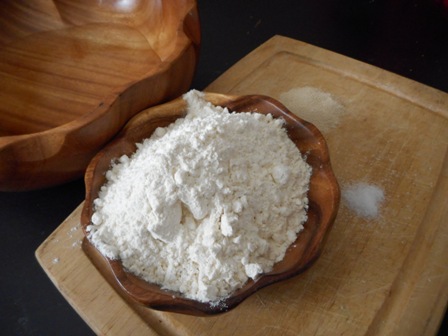
Previously, I hadn’t given much focused thought on the idea that Jesus described God as a baker. And not just a baker, but a woman who baked bread. And she wasn’t a wimpy woman at that—she was able to handle a large amount of dough at once. Three pecks of flour is the equivalent of 16 five-pound bags—enough with about 42 cups of water to make about 101 pounds of dough. That’s a lot of dough!(1)
So, here I see pictured a woman who is doing an everyday task—making bread, and she is physically strong and capable. I like that. How often we women are called on to be physically strong and capable!
I think sometimes that we assume that the Bible and Jesus portray God as being male since most of the language used in relation to him is masculine. But there is a significant difference between human gender and the gender of human language. We have to keep that in mind when we begin to think seriously about the nature of God.
I know that many men are good bakers. In fact, I remember my dad being fond of making unleavened bread. It was something he took up doing late in life that I never expected to find him doing. I tasted some of his products and they were pretty good. But perhaps the culture in Jesus’ day expected a baker to be female—so here God is pictured as a woman.
Breadmaking is something I enjoy doing. In fact, at one point in my life, I started making all our bread by hand because the motion of kneading the dough helped me to heal from an injury to my wrist. It became a therapy that prevented me from having to have surgery. And it worked. And it’s a creative process. I love being creative—I take after the Creator in that way.
But, back to the Breadmaker. The woman with all that flour hides leaven in the flour and it all becomes leavened. One of the simplest recipes I’ve used is for making pizza dough, and it probably resembles pretty closely how bread was made centuries ago. And it got me to thinking about how hiding leaven in flour is related to the kingdom of God.
Most all of the recipes that I can think of for bread start with yeast and water (or milk), a touch of salt and oil. All of that comes first. It is possible that what is meant by leaven in this parable was sourdough starter, which is a small batch of dough that is full of active yeast cultures. Either way, the ingredients that we start bread with—oil, salt, water—along with the yeast, are often used in the Word to describe God, Jesus and the Holy Spirit. This is worth giving meditative thought to.
In fact, I go back to the beginning of the world and find there hovering over the deep waters, the Spirit of God, who when the Word spoke the will of the Father, brought about our existence. God breathed the Breath of life into all that lives and breathes. All the animals and humans breathe oxygen in and carbon dioxide out. It is carbon dioxide that is created when the yeast in bread begins the fermentation process. And this is what causes the dough to rise. Thought-provoking.
Once these leavening ingredients are blended with the flour, there is no separating of them. The leavening process begins to fill the whole wad of dough, especially when the strong, capable baker begins to knead the dough. I’m not even sure she could stop the process once she started. The leaven is an intimate part of the dough, and this becomes evident as the dough begins to rise, and when it is baked into bread.
The kingdom of God is not something that just appeared when Jesus came to earth. For he was in the person of the Word, present in the beginning with the Father and the Spirit when all was made. The purposes and plans of God have not been derailed, but are gradually being kneaded into the dough. In time the heat of the fire will reveal an awesome loaf of bread.
In the meantime though, we find that the dough isn’t always compliant and responsive to the baker. As she pushes the dough down with her hands, the dough pushes back. The working of the dough and its response both positive and negative are a part of the bread-making process.
We tend to think God’s goal right now is to get rid of everything bad in the world. Just slay all these dragons, Lord! But the thing is that God is allowing the evil here for the moment—though he hates what it does to his children—so that he can accomplish the kingdom work he’s trying to do. He’s allowing us to resist him—though it’s foolish to do so—because he knows that it is a part of the free will and growing up process. He’s big enough, clever enough, perfect enough to deal with evil summarily and completely in his own time and way. But he doesn’t always do it right this minute when we think he should.
The baker decides what the end loaf is going to look like. Dough can be used for many things. In fact it can be divided up and used as individual little loafs we call dinner rolls. It can be used as a base for pizza. It can be broiled, boiled and baked as bagels. It can be fried as fritters or sweetened and spiced as cinnamon rolls. Or it can just be made into a plain, old loaf of bread. That’s the baker’s call.
We don’t know what the kingdom of God is going to look like in the end. We’re not really sure what the divine Baker is doing right now or why he is doing it. But one thing is sure—the leaven is filling the whole loaf. And all that God has created shares his Breath of life and participates in his kingdom life. And God’s not going to quit until he has a perfect loaf of bread. I can’t wait to see how it turns out and what it tastes like. I have a feeling it might taste a lot like the bread on Sunday morning’s communion plate.
Holy God, our Heavenly Baker, we are so thankful that you know what you are doing. We’re grateful that we can trust you to do everything necessary to complete the breadmaking process and to bring to pass the fullness of your kingdom. We trust you to finish what you have begun, and we look forward to sharing the bread of heaven with you in eternal communion. In the name of the Father, Son and Spirit. Amen.
”He spoke another parable to them, ‘The kingdom of heaven is like leaven, which a woman took and hid in three pecks of flour until it was all leavened.’” Matt 13:33 NASB
(1) Capon, Robert Farrar. Kingdom, Grace, Judgment: Paradox, Outrage, and Vindication in the Parables of Jesus. Grand Rapids, MI: William B. Eerdmans Publishing Company, 2002. Pg. 100.
Expectancy
by Linda Rex
One of the things that I enjoyed when my children were younger was buying them gifts for a special occasion. Months before the event I would be listening to them as we did things together, trying to see what kind of things they enjoyed and what they might be interested in having. We would walk through a store while I was getting some household items, and I would watch them linger over a toy or game that caught their eye.
I’d watch them plan out the number of chores they would have to do or how much allowance they would have to save up to buy it. Often it would be more than what they could manage immediately. They’d talk about it occasionally, maybe even hint around about it, but for them it was just a dream—their heart’s desire that they couldn’t see their way to achieving.
So it was with much secret delight that I would find a way to purchase the item and wrap it up so I could give it to them on a special occasion. Then I would expectantly look forward to the day when I could watch their face light up with joy as they opened their gift.
Can you imagine with what expectancy God awaits to reveal his Son to us in all his glory? And how he joyfully anticipates the day when you and I along with all his children will be revealed in the full glory he has given us in Jesus Christ—a glory that is already ours, but is for now, hidden with Christ in God? (Col. 3:3-4)
The ascension, which we will celebrate this Sunday, is so significant an event!
Jesus brings each and every one of us into the presence of the Father in the Spirit, so that our redemption is secure. And each and every moment, as a living Lord bearing our humanity, Jesus Christ intercedes for us and intervenes in our lives day by day.
He is actively working, building his temple, the dwelling place of God, even now—working for the day when everything he accomplished in his life, death, resurrection and ascension into glory will be worked out in our human sphere, when his kingdom will be on earth as it is in heaven.
And we get to participate in what he is doing in bringing his kingdom here on earth! We can stand expectantly waiting and doing nothing. Or in our expectant waiting, we can be busy participating in his work of bringing his kingdom to earth.
We can respond to the lead of his Holy Spirit as God shows us ways to love God and love others. God has given each of us a way to participate in what he is doing in the world—let us do it in union and communion with the Father, Son and Spirit and with one another day by day.
And let’s do it in expectant joy! Our ascended King rules even now and is handing us the gift we’ve only dreamed of having. He’s saying to you and to me: “Open it! It’s yours! I bought it, made it, just for you! You’ll love it!”
Thank you, Daddy-God, for the great gift you’ve planned from before time and have prepared for us. You gave everything up so we could have this gift. And you gave us your Son and now you’ve given us your Spirit. We have been given all we need for life and godliness. What a gift! Thank you so much! We receive it with great joy and gratitude. Amen.
“And after He had said these things, He was lifted up while they were looking on, and a cloud received Him out of their sight. And as they were gazing intently into the sky while He was going, behold, two men in white clothing stood beside them. They also said, “Men of Galilee, why do you stand looking into the sky? This Jesus, who has been taken up from you into heaven, will come in just the same way as you have watched Him go into heaven.” Acts 1:9-11
- ← Previous
- 1
- …
- 4
- 5
 Our Life in the Trinity