
life
Repent and Believe

By Linda Rex
Have you ever had that experience where you were praying about something, asking God to move in some situation, and when things actually began to improve, you were still in the “I have to do something to fix this” mode? It reminds me of the story of Peter being released by the angels from prison, going to find the brethren who were praying for him, but when he knocked no one would believe it was him knocking on the door.
I have no doubt that we want God to intervene and to answer our prayers. But do we really expect him to? Do we really believe God exists and that he wants to and will intervene in our lives and circumstances?
In this culture which is so heavily wrapped around science and proving things according to empirical data, I think it is interesting that we even have scientific studies that prove that praying for the sick actually works. But why do scientific studies of such a thing? Why do we have to prove that prayer works and is helpful?
I wonder if there is a deep inner longing in each of us to experience in a real way something outside of our human existence, something beyond ourselves that is more than we could ever be and that is lovingly inclined towards us and willing to help us when we are in need. And yet if there is such a Being or Force, we most certainly don’t want them to interfere with us or to tell us what to do. We want all the benefits of such a relationship, but none of the responsibilities.
We want to have help when we need it, to have success and good health and all of the glitz and glamour of a blessed life, but we surely don’t want anyone to dictate to us how to go about obtaining it or living it. We like to do life on our own, to deal with our problems our own way, and then to blame God or karma when things don’t turn out like we expect.
And prayer seems to be that guilt thing that we think maybe we ought to do more of now and again. We know prayer would be good to do when we’re in crisis and we don’t know where else to turn. But what do we know and believe about the God who we are praying to? Do we really believe he cares and that he will give us an answer? Or are we essentially atheists or humanists in our prayer life?
There is something fundamentally wrong here, and I believe it has to do with what we believe about God. First off, it is wonderful if we can get it through our minds and hearts that God is real and that God loves us. Period. He did, does and will love us unconditionally, no matter where, when, how we find ourselves—even in the midst of the stupid stuff we do.
And God gives us grace—total, unconditional forgiveness. But in the midst of that forgiveness and acceptance is the unspoken reality that we are in need of that forgiveness. Karl Barth in his Church Dogmatics often reminds his readers that inherent in our receiving forgiveness is the acknowledgement of our need for it. God offers through receiving his gift of grace the opportunity to experience a change of mind and heart. This is called repentance and faith.
One of the ways we need to experience repentance and faith in is in this area of our view of God so we see him as a loving, merciful Lord who answers our requests for help and succor. We need to come to see God as a Person who cares about every facet of our life and who is ready and willing to help.
But along with that understanding of who God is needs to come an appreciation and respect for the right he has as a living Lord to personify for us who we are to be as human beings. The lives we live ought to reflect the God he is. How we think, behave and speak ought to correspond directly to the thinking, behavior and speech of Jesus Christ as it is revealed to us through the Holy Spirit and in the Holy Scriptures. We need to acknowledge that sometimes the mess we are in is our fault and we need to change.
Don’t get me wrong. God’s not hovering over us waiting for some reason to slap us silly since he knows we’re going to mess up. No. He loves us, and he hates anything that will mess up our understanding and experience of that love. He hates anything that will mar the beauty of his image in us. He longs for us to fully experience the love, joy and peace of a life like his that is whole, blessed and healthy.
He wants us to see him for who he really is and to live accordingly. And prayer becomes a part of that reality in our lives. Because we know him as a God who loves and forgives us, we want to know him better. Knowing him better means we begin to see things about ourselves that need changed. So we go back to him, secure in his forgiveness and love. And our relationship with God grows deeper as we are continually drawn to deeper levels of repentance and faith.
Drawing closer to God means we see more areas of our being and life that do not reflect his glory. So we surrender to God in those areas rather than resisting him. Prayer then is just a natural part of our relationship with God—he shares himself with us, we share ourselves with him, he responds, we respond—throughout our lives it goes on. But we need to be careful not to allow any part of our being or life to be a place where God is not allowed to have a say in how we think, speak or live.
I’m not talking about rules. I’m talking about a real relationship with someone who wants to do more for us than we could ever think of or ask him for. I mean being so close to God in our hearts and minds that we don’t want to wound him in anyway by the things we think, say and do. We seek only to give full expression of God’s glory in and through us in every way possible.
This is tough and it is counter-cultural. It goes against our natural human inclinations and it definitely stands in opposition to all that is dark and evil and opposes the will and purposes of God.
But God stands with us and promises us that he will never leave us or forsake us. He is committed to our becoming all we were meant to be as his adopted children in Christ and by his Spirit. And he won’t quit until he is done. We can count on that.
Holy God, please forgive us our wrong-headed views and thoughts of you. Grant us the ability to see you with new eyes and hearts. Open up to us a new understanding of who you are and how your heart toward us is only good and loving. Grant us repentance and faith, through Jesus Christ and in your Spirit. Amen.
“Now to Him who is able to do far more abundantly beyond all that we ask or think, according to the power that works within us, to Him be the glory in the church and in Christ Jesus to all generations forever and ever. Amen.” Ephesians 3:20–21
Thorns and Finding Significance

by Linda Rex
I was sitting on my loveseat this morning admiring the beauty of my indoor forest, when one of the plants caught my eye. This particular plant was given to me last year and is called Crown of Thorns. Legend says a plant from its family was used to make the crown of thorns placed on Jesus’ head before his crucifixion.
Whether or not this is true, I can’t say. But it is a pretty plant, and interesting to look at. It grows in its little pot, feeding on air and water, and puts out new leaves that reach toward the sunlight. I’m sure it has no thought that perhaps many millennia ago its forefather was used in such a significant way. It simply goes about its business of glorifying God by being what it is, a thorny plant.
How unlike this simple, beautiful plant we are! We go about day by day, worrying about the weather, politics, the neighbors, the laundry, and give very little thought to the simplicity of just being who we are created to be—human beings made in the image of God to love and be loved by him. We make life so complicated!
We search for some kind of significance in this world. We try to be the best at something, to impress the boss, to be the most attractive woman at the party. We want to write the best-selling novel, win the Emmy, bring home the Best of Show ribbon from the fair. If we’re not trying to be the best, often we are trying equally hard to be invisible. In this case, our significance is in not-being, being nothing of value or importance.
Somehow along the way, we miss the realization that significance of any kind, even insignificance, is inherently dependent upon human expectations and values. There is a perceived standard that we seek to achieve so that we are good enough or better than most or someone worthy to be noticed. In every contest to determine who is the greatest, there will always be the one who is the worst.
Perhaps this is one reason Jesus was so emphatic that this is not the way to deal with issues of significance. For Jesus, real significance comes through service, sacrifice and a willingness to die for others. The things which we value don’t even count in the real scheme of things. We’d be so much better off if, like the plant, we just lived each moment being in relationship with God and others, trusting him to supply our daily needs.
It’s hard to understand the significance of a plant with lots of thorns. What good is it? Does it serve any worthwhile purpose? Even if it is used as a crown of thorns on the brow of a Savior, the plant’s significance is inherent within, not in how it is used. It is worthwhile because it is. And that’s enough.
And we are significant not just because we are but also because we are made in the image of the One who was, is and will be. We find our significance in our relationship with the One who made us and who provides us all we need for life and godliness. Our real significance is fully expressed as we live in love with him and with others he places in our lives, who share his life and love. This is what really matters and what will last when everything else we value is gone.
To be concerned about our significance is to be inwardly focused. God calls us to be upwardly and outwardly focused instead. We trust him to meet our needs, while we live joyfully and gratefully in relationship with him and others. We are valuable and worthwhile because we are and because we are his.
So we can approach life, with its weather, neighbors, politics and laundry, from a place of rest, of peaceful assurance that all will be well and is well because we are held in the arms of the God who made us and declares that we are his. He has demonstrated in Christ that we are important, significant and valued, not because of our performance or perfection, but because we are and we are his.
Thank you, Father, for valuing us, caring for us and providing for us. Thank you for the gift of your Son and your Holy Spirit, through whom you transform and grow us up into your likeness. May all our significance, value and worth come from you alone. Through Jesus, our Lord. Amen.
“And after twisting together a crown of thorns, they put it on His head, and a reed in His right hand; and they knelt down before Him and mocked Him, saying, ‘Hail, King of the Jews!’” Matthew 27:29 NASB
Power To Love the Unlovely

by Linda Rex
This Sunday is the last day of Advent, and the topic for the day is Love. What crossed my mind this morning was that one of the most difficult things God asks us as humans to do is to love the unlovely.
At one point in our team meeting Wednesday, we were looking at the sermon Jesus gave on the Mount of Olives. It seems that Jesus gave a lot of “impossible” imperatives, including praying for and doing good to those who use and abuse us. We all know how impossible this is for us as humans—we have enough of a challenge just loving those who love us back.
And we agreed that that was Jesus’ point. We can’t just naturally love the unlovely. It’s not in our nature to do it. Apart from the grace and power of God, we will not and cannot do this impossible task he is asking of us.
Anyone who lives in a painful and difficult marriage can attest to the fact that it is very difficult, if not humanly impossible, to love someone who is critical, selfish and even downright abusive all the time. It is very hard to love someone who dumps a truckload of emotional baggage all over you whenever they get the chance. Loving the unlovely is not a job for sissies, that’s for sure.
But that doesn’t make it any less a requirement for us as human beings to love one another. God’s two great commandments include loving God with all we are, and loving our neighbor as our self. Loving our neighbor and loving God, Jesus said, is the fulfillment of the law.
So why would God ask us to do something we cannot of ourselves do? Could it be that God never meant for us to try? For in the scriptures we see that God, from before time, always meant to send his Son, to stand in for us, to take our place. God always meant for us to love him and love others, within the context of a relationship—the eternal relationship he had and has even now with his Son.
Here at Christmastime, we celebrate the coming of the Word of God into human flesh—the Father’s Son given as a gift for all humanity. This gift is so precious, because in Jesus, God gives himself. God gives us his love—through a Son who lived died and rose again—and through the Spirit Jesus sent from the Father to transform human hearts by faith.
It is by the love of God within through Jesus and in the Holy Spirit that we are able to love God and love one another the way we ought to. It is as we live in loving relationship with God and each other that we are able to be the people God asks us to be. It is not something we have to try and figure and work out on our own by following a lot of lists of do’s and don’t’s. They come in handy as guideposts, but they do not transform human hearts. Only the Holy Spirit does that. He is the love of God shed abroad in our hearts.
Finding the will and power to love the unlovely comes only from God. It is God’s gift to be able to love both with grace and with truth. There are times love has to be tough and times when it needs to be gentle. It is the Holy Spirit who guides us in discerning what is needed and empowers us to do it in a timely way. And it is God through Christ and in the Spirit who gives us grace when we fail to love as we ought to love—something that will happen, since we are still very human and very faulty.
We need to see our loving of God and of others as a participation in Christ’s loving his Father and loving of others in the Spirit. It’s not something we do on our own. We were never meant to.
So this Christmas season, as we find ourselves in situations in which we are with people who are difficult to be with, or around people who are very unpleasant to be around, let’s remember that we are called to love the unlovely in the midst of a relationship with God who through Jesus and in the Spirit loves the unlovely in our place. We just get to join in with what he’s already doing. We can be alert to the possibilities of doing the impossible, because we are in Christ and he is in us through the Spirit.
Merry Christmas!
Dear God, thank you for never asking us to do anything you are not already doing yourself, and for never asking us to do it on our own. Thank you for the most precious gift you have ever given—the gift of yourself—in your Son Jesus, and in the gift you sent through him, the Holy Spirit. Thank you for not only giving us forgiveness, but for giving us all new life and the ability, through Jesus and in the Spirit, to love the unlovely people you place in our lives. Amen.
“For God so loved the world, that He gave His only begotten Son, that whoever believes in Him shall not perish, but have eternal life.” John 3:16
“…the love of God has been poured out within our hearts through the Holy Spirit who was given to us.” Romans 5:5
Avoiding Apocalyptic Paranoia
By Linda Rex
I was reading some short quips from a book called “Encyclopedia of 7700 Illustrations” when I came upon the following:
Until recently, most astronomers believed that our sun could maintain its present heat-energy output for at least another eight million years, because its hydrogen supply is only about half exhausted.
More recently, however, this theory has been reappraised. It is now believed that once a star (our sun, by the way, is just a medium-sized star) has expended half of its hydrogen, it is in danger of experiencing a nova. This means that a star the size of our sun gets brighter and hotter for a period of about 7 to 14 days—then becomes darker.
There are about fourteen novas a year in the observable universe. Many astronomers believe that our own sun may be about to nova because of the increased sun-spot activity. (1)
This kind of statement usually peaks my interest, but this time, since it was not written by a scientist nor was it found in a scientific journal, I had to seriously investigate its truthfulness before I took it seriously. In fact, statements like these than can provide fuel for the fire for those of us who like to make apocalyptic warnings and prophecies.
For example, if I were to read something like the above quote, and then read 2 Peter 3:10-12, I might develop some real concerns about the end of the world coming soon and what it will be like:
10 But the day of the Lord will come like a thief, in which the heavens will pass away with a roar and the elements will be destroyed with intense heat, and the earth and its works will be burned up. 11 Since all these things are to be destroyed in this way, what sort of people ought you to be in holy conduct and godliness, 12 looking for and hastening the coming of the day of God, because of which the heavens will be destroyed by burning, and the elements will melt with intense heat! (NASB)
Wow, it sounds on the surface that the world could really end in a flaming ball of fire at any moment! Here’s where we start preaching hail, fire and brimstone. Get your act together now or you’re going to end up in the burning flames.
Reading through the titles of so many articles on the Web also brings to mind other types of “end of the world” scenarios or other forms of possible disaster: everyday foods that create cancer, a mysterious disease causing paralysis in children, women in India being poisoned by medicine—the list goes on.
The common thread here, I believe is fear. Fear is the one thing that keeps us from seeing, hearing and believing the God of the universe loves us and holds us in his hand. Fear grabs hold of us and blinds us to the truth that we are surrounded with and held in God’s love. It is God’s perfect love which casts out our fear and removes the torment that comes when we feel we have to hold everything together ourselves.
It is worth pausing a moment to ask ourselves exactly how much it would matter in the long run if everything ended now. What if I did accidently take a medicine that ended up killing me? What if my next medical checkup does show I have cancer? What if the sun really were to go supernova tomorrow? Is there reason for panic?
None of us are really truly prepared for the thief in the night, though some of us may have a watchdog and others of us have an alarm system. The thief in the night comes when he comes, and probably when we least expect him and most definitely do not want him. But if we are alert and prepared, it won’t be as much of a catastrophe as it would be if we were totally clueless.
I believe the issue here is realizing just who we are and who we belong to. Since we are loved by a gracious, long-suffering God who came himself in his Son Jesus Christ to rescue us, we really don’t have anything to fear. We have our early warning system in the Holy Spirit who dwells within us. We are God’s children, children of the light not children of the darkness, and he is looking after us.
When we live moment by moment in close relationship with God, we know and recognize the signs of the times. We are guided by and led by the Holy Spirit. We know and obediently respond to Jesus as he calls to us to follow and to obey.
Then we, as children of light and not darkness, will not be overwhelmed by anything that comes our way. Rather, we are prepared and aware and will respond in accordance with God’s will for us before and in the midst of each situation in which we may find ourselves.
It won’t matter then whether or not the sun picks tonight to be the moment it decides to go supernova. If we get the medical report that signs our death warrant, we will be able to face it headfirst, in faith. We will trust that in the midst of it all, God is holding us and will bring us through to that glorious day when we will meet him face to face, and it will all be okay.
As we live and walk in the light of God’s Word and in the power of the Holy Spirit, we soberly approach our future with faith, hope and love. We are alert to the things in our lives that may distract our attention from the one Being who has, at every moment, our best interests at heart. We’ll be able to weather every storm that comes because we are anchored in Christ, in our eternal relationship with the Father, through Jesus and in the Holy Spirit.
So bye-bye to all these apocalyptic worries. We focus on Christ, not on the headlines. We focus on living in love and grace with others the way God lives in love and grace with us. We weather the storms of life in Christ, carried by his faith, hope and love. And all is and will be well.
Thank you Father, that we have nothing to fear. Though the stars may fall, our sun may explode and our world fall apart or burn up in flames, we are held close in your hand. Nothing but love fills your heart for us. You want us to be with you always. Grant us the grace each day and each moment to trust in your perfect love for us that you have shown to us in Jesus, and by and in the gift of your Spirit. Give us the grace to believe and to trust you in every circumstance we face, that you will bring us through. Through Jesus, our Lord and Savior, we pray. Amen.
“But you, brethren, are not in darkness, that the day would overtake you like a thief; for you are all sons of light and sons of day. We are not of night nor of darkness; so then let us not sleep as others do, but let us be alert and sober.” 1 Thess. 5:4–6
(1) Tan, P. L. (1996). Encyclopedia of 7700 Illustrations: Signs of the Times (p. 740). Garland, TX: Bible Communications, Inc.
Coming out of Darkness
By Linda Rex
This morning as I padded my way into the kitchen early in the morning, my eye was caught by a shaft of bright light on the floor. Since it was still dark, I peeked out the window to see the source of the light. All was black, but up in the night sky hung a silver moon, big, round, and glowing with white light.
I have a fondness for moonlight. Perhaps it is my romantic side that calls to me when I see a huge orange moon rise over the horizon. I have to stop and take notice—God’s playing with his creation—all the colors, shapes and creatures in constant motion, taking on new forms each moment of each day.
I think it is significant that God creates such beauty for us to enjoy at night when the earth is at its darkest. For it is an excellent illustration of what God does in the midst of the darkness in our lives.
Surely all of us know the experience of having some place, some event, some experience in our lives which we don’t want anyone else to know about. There are places of shame, guilt, anger, loss and grief. We keep these hidden, out of view, sometimes even hidden from ourselves. It seems to be the safest, most painless way to live.
But God woos us with the moonglow of his love in the midst of our dark places. He doesn’t allow us to wallow in shame or self-pity, but calls us to bring everything out into the light of his presence. Jesus, as the Light, is now joined with us and has sent his Holy Spirit to dwell in our hearts.
We are living in the Light now, but we seem to think we can hide behind the bushes with Adam and Eve. God never meant for us to live in fear of him. He meant for us to live in a covenant relationship of love with him, moment by moment living out our human existence in his presence. All that we do is a participation in his divine life and love.
So Jesus calls us into the light of his presence and reminds us that when we are truthful about who and what we are, we will live and walk boldly with him, no matter where we are at in our journey. If indeed, we are struggling with some character flaw or relational issue, he isn’t amazed or appalled. Rather, he is concerned. He wants to help. He wants us to acknowledge our dependency upon him to do the right thing in hard situations.
His calling to us is to live and walk in truth, in relationship with the Lord of all, in the light of his presence. Even if we have fallen short in some way of Christ’s perfections, the truth is that Jesus stands in our place. We can come boldly before the throne of grace because it is Jesus who is there already, holding for us the grace we desperately need. He’s already paved the way for us to be forgiven.
As we live in this intimacy with God through Christ in the Spirit, doing all of life in God’s presence in constant conversation with him and knowing his great love for us, we find that we don’t want to do anything to mar that relationship. We dread the possibility of ruining that beautiful relationship. We don’t want to grieve our divine Daddy, and we don’t want to insult the Spirit of grace. Our brother is so precious to us that we wouldn’t dream of hurting him—no, we’d rather die first. And so we find that we begin to live out of a new center. We find that old ways of being and doing begin to fall away.
Those things we have to continue to wrestle with, we find the grace for in the midst of this ongoing relationship with God in Christ. It’s not about being good enough, and it’s not about being saved or not saved. That was all taken care of a long time ago in the coming of the Word in Christ. No, now it’s about living in the presence of God each and every moment, and yielding to the will and work of God as he conforms us to the image of his Son.
Transformation is something God is working out in each of us. Christ is there, and the Spirit awakens us to reality that the Light of God is now present with us, in us and for us. God loves us and always will love us. He won’t forsake us, but has promised himself to us forever.
This is where darkness becomes light. For surely we would, if we realized, run to the Light and not away from it. Why hide when being in the Light is so freeing and so filled with joy and peace?
Lord Jesus, you are our Light. You are the one who comes to us in the Spirit and frees us to be all that we were created to be from before time began. Thank you, Father, that in your Son we are free now to live in the light of your presence every moment of every day. Thank you for this gift of life and of love. We love you and may, dear God, our lives bring you joy every moment of every day. Through Jesus our Lord. Amen.
“This is the judgment, that the Light has come into the world, and men loved the darkness rather than the Light, for their deeds were evil. For everyone who does evil hates the Light, and does not come to the Light for fear that his deeds will be exposed. But he who practices the truth comes to the Light, so that his deeds may be manifested as having been wrought in God.” John 3:19–21

More Than Just a Law

by Linda Rex
A while ago I wrote a blog “The Curses and the Ten Commandments” in which I talked about our assumptions regarding the nature of God and the curses and law he gave to Israel. I believe God’s intent was to call his people to a deeper way of thinking and believing that involved a relationship of covenant love with him and with one another rather than to just obey a list of do’s and don’t’s.
In my daily readings I’m in the book of Joshua now, and in chapter 8 I came across the circumstance where Joshua and the nation of Israel actually put into effect what Moses instructed them to do at Mount Ebal and Mount Gerizim. It is interesting that it says that they did it “just as Moses the servant of the Lord had given command at first to bless the people of Israel.” (v. 33) God’s intent from the beginning was to bless Israel, not to curse them. His heart toward them was love.
Here at this place the entire law was read to the people of Israel and the strangers who were among them. The law of Moses was also written on stone at this place. Was this just the Ten Commandments, or was it a summary of all the laws we find in the Torah? I guess I would need to look back into the traditions of the nation to find out the answer to that question.
But the point here is that after the long journey in the wilderness in which the older generation passed away and the new generation came across the Jordan into the Promised Land, Israel renewed their covenant relationship with God. They heard what it looks like to live in a loving relationship with God and with one another. They were told what would happen if they chose to live out of sync with who they were as God’s covenant people. The new generation was called to love God and love one another as they entered into their new life in their new land.
It is instructive that this event occurred after what happened at Ai. After Israel had crossed the Jordan River, God had toppled the walls of Jericho, allowing the Israelites to completely demolish the city. The Israelites were on such a high from their success that they took off to Ai and attacked that city as well. But there was a small problem—they didn’t ask God first. And so they were routed at their first attempt and suffered a humiliating defeat.
What they didn’t realize was that somewhere in the midst of their nation was a person who had violated the covenant relationship. This person had insulted the God who was the nation’s Warrior by taking things from Jericho which had been devoted to God, and hiding them among his personal belongings. Achan had stolen from God. Sure, it was a little thing, but God is in the little things as well as the big things. All of life is open to and revealed to the God who lives not only in heaven but who also is omnipresent—around, in and with us moment by moment.
After this issue was resolved, then God gave the nation instructions on how to attack the city of Ai. And it was defeated, just as he told them it would be. God knew that if the Israelites took on the people of Canaan on their own, they would be destroyed. But in relationship with him, no one could defeat them. He was committed to their success, not their failure. But only as they participated in his plan for their lives. Only as they lived in loving relationship with him.
It seems pretty gruesome to us today to think that God would instruct one nation to destroy another nation. But he had his reasons and that’s food for an entirely different discussion. Israel had a reason for her existence—to be the womb of the Messiah, and there were things that had to be done to prepare the way for the events of that sacred Bethlehem night when Jesus was born. All these people who lived and died were taken up in the life, death, and resurrection of Jesus our Messiah—so God made it all right in the end.
The key thought here is though, God doesn’t exist in a vacuum somewhere out in space or up in heaven, isolated from us as human beings. True, he is transcendent—completely other than we are, and we only know his immanence or nearness as he chooses to reveal himself to us. But he also chooses to be in relationship with us as human beings. He chooses to relate to us one on one. And he proved this by coming and existing in our humanity as the man Jesus Christ.
We are often so busy living our lives, doing what we do to survive, that we don’t stop and sit in the stillness with God. We don’t sense God in the quiet and in the active moments of our lives where he is truly present all the time. We, who were created to live in relationship with God and were given that relationship freely through the incarnation of Jesus Christ, live as though God doesn’t exist. But he does—and we would know it, if we would just make room for him in our hearts and lives.
So, perhaps, like the Israelites, we need to take the time to sit and listen to the words of love God has for us in his Word and by his Spirit. Perhaps we need to climb up on our divine Daddy’s knees and nestle against his chest and feel his divine Breath against our cheek.
Maybe we need to sense his presence with us as we mow the lawn and close that business deal. Just possibly, we might realize he’s smiling too as we see our child score the winning goal for the soccer team. For he loves each and every one of us and he waits with open arms to embrace us and hold us close anytime we choose to run to him. Maybe even now would be a good time to begin this new way of living life—in close companionship with the One who loves us with a never ending love.
Our heavenly Dad, who not only lives in eternity but is also present in us, with us and for us at each moment, thank you for your great unfailing love. Remind each of us today how much you love us. Show us that we are precious in your sight. Teach us how to create room for you in our lives and hearts. We want to participate in all that you are doing—to share life with you now and forever through Jesus Christ and in the Spirit. Amen.
“He wrote there on the stones a copy of the law of Moses, which he had written, in the presence of the sons of Israel. All Israel with their elders and officers and their judges were standing on both sides of the ark before the Levitical priests who carried the ark of the covenant of the LORD, the stranger as well as the native. Half of them stood in front of Mount Gerizim and half of them in front of Mount Ebal, just as Moses the servant of the LORD had given command at first to bless the people of Israel.” Joshua 8:32-33 NASB
When God Creates Leftovers

by Linda Rex
It struck me this morning that God has this thing about creating leftovers. He doesn’t just provide in times of need. He often does it in such a way that there are plenty of leftovers for another day.
I think this must be his way of reminding us that he’s got it all under control and that we don’t need to fear that we’re going to run out somehow. I think, at least from my personal experience, that we tend to think God only gives just enough for what we need each day. He does that at times, it’s true. But many times he overflows us with plenty just as an outpouring of his love for us.
This morning I was reading about Jesus feeding five thousand people with five loaves of bread and two fish. I was reminded that this wasn’t the first time God fed a crowd with a very small amount of food. And to top it all off, there were plenty of leftovers both times.
In the Old Testament we find the story of Elisha the prophet, who along with a large crowd of disciples was dealing with the reality of a famine in his land. Typically a prophet or a teacher like Jesus did not have the means to feed or support his disciples. It was more appropriate that the disciples provide for the one who was instructing them in spiritual matters.
So a man came to Elisha and gave him what the Torah commanded—firstfruits—a precious gift in that time of famine. Twenty loaves of barley and fresh ears of grain—but for a hundred people? And yet God blessed and multiplied that gift and there was plenty left over. From one man’s obedience, another man’s faith, and the power and blessing of God Almighty, came an abundance for many with plenty leftover for the future.
I wonder if the disciples of Jesus’ day gave any consideration to this story when Jesus suggested that they feed the multitude. Since it wasn’t the teacher’s role to feed his disciples, Jesus was showing a hospitality that was unexpected. The disciples’ incredulity was evident. I can almost hear them say, “Are you kidding, Jesus?”
I imagine Jesus must have really enjoyed the experience of providing for a hungry crowd, watching with amusement and pleasure as their hearts and eyes filled with wonder at the miracle occurring before them. How tickled he must have been as the disciples who were so worried about tomorrow’s meal found in the end that there was a full basket for each of them to carry. What joy Jesus must have taking in providing, not just for their daily needs, but also an abundance for their future needs.
How much more so, does the God whom Jesus most perfectly reflects, want to do the same for you and me? Sure, there are times when we just have to depend on him daily and grow in our faith, trusting him to provide moment by moment. But aren’t there also many times in our lives, if we would just stop long enough to see and to be grateful, that God just rains down the blessings? When he pours out more than we can really take in?
Perhaps you are standing there today with a single loaf and a piece of fish and wondering how you are going to feed your family. You’re stressing out because you are behind on your bills and new problems keep stealing what funds you do have. Well, that’s where Jesus comes in.
It’s helpful to see Jesus as being the same today as he was in that secluded place with the multitudes. He still has a heart of compassion and an ability to provide so abundantly that there are plenty of leftovers. He just asks us to have a seat, to be still, and to trust him to multiply our loaf and fish so that our need will be more than met.
It’s also helpful to realize that Jesus didn’t do this all the time. We only have a couple of episodes recorded for us when he actually fed a crowd. But it seems that his disciples were always fed and cared for, the bills were paid, the taxes turned in on time (even though it took a little fishing first to come up with the required coin, Matt 17:27). When we walk with Jesus day by day, he takes care of us, and many times more abundantly than we could ever ask or imagine. (Eph. 3:20) God provides and he also doesn’t seem to mind leaving behind some leftovers.
Generous Father and Gracious Jesus, thank you for all you provide by your Spirit day by day and moment by moment. Thank you that you give freely and with such love that we are at times overwhelmed by your goodness. Fill us with the faith we need to trust you in times of scarcity and want. And grant us the grace to just as freely and in faith offer all that we have to others, trusting you to make up the difference and to provide the leftovers. In Jesus name. Amen.
“Now a man came from Baal-shalishah, and brought the man of God bread of the first fruits, twenty loaves of barley and fresh ears of grain in his sack. And he said, ‘Give them to the people that they may eat.’ His attendant said, ‘What, will I set this before a hundred men?’ But he said, ‘Give them to the people that they may eat, for thus says the LORD, “They shall eat and have some left over.”’ So he set it before them, and they ate and had some left over, according to the word of the LORD.” 2 Kings 4:42–44 NASB
“Ordering the people to sit down on the grass, He took the five loaves and the two fish, and looking up toward heaven, He blessed the food, and breaking the loaves He gave them to the disciples, and the disciples gave them to the crowds, and they all ate and were satisfied. They picked up what was left over of the broken pieces, twelve full baskets.” Matthew 14:19–20 NASB
The Kingdom, the Baker and Breadmaking
by Linda Rex
Jesus had this way of taking the most everyday tasks and events and turning them into a deeply spiritual concept, especially when he started talking about the kingdom of God. One of those unique parables of Jesus was brought to my attention in a new way this week as I prepared for Sunday’s sermon.
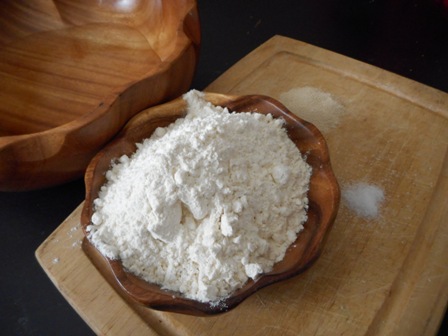
Previously, I hadn’t given much focused thought on the idea that Jesus described God as a baker. And not just a baker, but a woman who baked bread. And she wasn’t a wimpy woman at that—she was able to handle a large amount of dough at once. Three pecks of flour is the equivalent of 16 five-pound bags—enough with about 42 cups of water to make about 101 pounds of dough. That’s a lot of dough!(1)
So, here I see pictured a woman who is doing an everyday task—making bread, and she is physically strong and capable. I like that. How often we women are called on to be physically strong and capable!
I think sometimes that we assume that the Bible and Jesus portray God as being male since most of the language used in relation to him is masculine. But there is a significant difference between human gender and the gender of human language. We have to keep that in mind when we begin to think seriously about the nature of God.
I know that many men are good bakers. In fact, I remember my dad being fond of making unleavened bread. It was something he took up doing late in life that I never expected to find him doing. I tasted some of his products and they were pretty good. But perhaps the culture in Jesus’ day expected a baker to be female—so here God is pictured as a woman.
Breadmaking is something I enjoy doing. In fact, at one point in my life, I started making all our bread by hand because the motion of kneading the dough helped me to heal from an injury to my wrist. It became a therapy that prevented me from having to have surgery. And it worked. And it’s a creative process. I love being creative—I take after the Creator in that way.
But, back to the Breadmaker. The woman with all that flour hides leaven in the flour and it all becomes leavened. One of the simplest recipes I’ve used is for making pizza dough, and it probably resembles pretty closely how bread was made centuries ago. And it got me to thinking about how hiding leaven in flour is related to the kingdom of God.
Most all of the recipes that I can think of for bread start with yeast and water (or milk), a touch of salt and oil. All of that comes first. It is possible that what is meant by leaven in this parable was sourdough starter, which is a small batch of dough that is full of active yeast cultures. Either way, the ingredients that we start bread with—oil, salt, water—along with the yeast, are often used in the Word to describe God, Jesus and the Holy Spirit. This is worth giving meditative thought to.
In fact, I go back to the beginning of the world and find there hovering over the deep waters, the Spirit of God, who when the Word spoke the will of the Father, brought about our existence. God breathed the Breath of life into all that lives and breathes. All the animals and humans breathe oxygen in and carbon dioxide out. It is carbon dioxide that is created when the yeast in bread begins the fermentation process. And this is what causes the dough to rise. Thought-provoking.
Once these leavening ingredients are blended with the flour, there is no separating of them. The leavening process begins to fill the whole wad of dough, especially when the strong, capable baker begins to knead the dough. I’m not even sure she could stop the process once she started. The leaven is an intimate part of the dough, and this becomes evident as the dough begins to rise, and when it is baked into bread.
The kingdom of God is not something that just appeared when Jesus came to earth. For he was in the person of the Word, present in the beginning with the Father and the Spirit when all was made. The purposes and plans of God have not been derailed, but are gradually being kneaded into the dough. In time the heat of the fire will reveal an awesome loaf of bread.
In the meantime though, we find that the dough isn’t always compliant and responsive to the baker. As she pushes the dough down with her hands, the dough pushes back. The working of the dough and its response both positive and negative are a part of the bread-making process.
We tend to think God’s goal right now is to get rid of everything bad in the world. Just slay all these dragons, Lord! But the thing is that God is allowing the evil here for the moment—though he hates what it does to his children—so that he can accomplish the kingdom work he’s trying to do. He’s allowing us to resist him—though it’s foolish to do so—because he knows that it is a part of the free will and growing up process. He’s big enough, clever enough, perfect enough to deal with evil summarily and completely in his own time and way. But he doesn’t always do it right this minute when we think he should.
The baker decides what the end loaf is going to look like. Dough can be used for many things. In fact it can be divided up and used as individual little loafs we call dinner rolls. It can be used as a base for pizza. It can be broiled, boiled and baked as bagels. It can be fried as fritters or sweetened and spiced as cinnamon rolls. Or it can just be made into a plain, old loaf of bread. That’s the baker’s call.
We don’t know what the kingdom of God is going to look like in the end. We’re not really sure what the divine Baker is doing right now or why he is doing it. But one thing is sure—the leaven is filling the whole loaf. And all that God has created shares his Breath of life and participates in his kingdom life. And God’s not going to quit until he has a perfect loaf of bread. I can’t wait to see how it turns out and what it tastes like. I have a feeling it might taste a lot like the bread on Sunday morning’s communion plate.
Holy God, our Heavenly Baker, we are so thankful that you know what you are doing. We’re grateful that we can trust you to do everything necessary to complete the breadmaking process and to bring to pass the fullness of your kingdom. We trust you to finish what you have begun, and we look forward to sharing the bread of heaven with you in eternal communion. In the name of the Father, Son and Spirit. Amen.
”He spoke another parable to them, ‘The kingdom of heaven is like leaven, which a woman took and hid in three pecks of flour until it was all leavened.’” Matt 13:33 NASB
(1) Capon, Robert Farrar. Kingdom, Grace, Judgment: Paradox, Outrage, and Vindication in the Parables of Jesus. Grand Rapids, MI: William B. Eerdmans Publishing Company, 2002. Pg. 100.
Justice and Grace—Strange Companions
by Linda Rex
What do you do when everything that matters to you in your life shatters and falls into pieces at your feet?
Sometimes I think that until we have this experience in our lives, we are only playing at living. Because it is in these situations that we find out who we really are in the core of our beings and what it is we really believe about ourselves, God and each other. Marshall Shelley in his book writes:
“It’s doubtful that God can use any man greatly until he’s hurt him deeply,” said A. W. Tozer. In weakness, God’s strength can be revealed. Joseph was jailed, David driven into hiding, Paul imprisoned, and Christ crucified, but even in defeat, God’s servants are not destroyed. Part of the miracle of grace is that broken vessels can be made whole, with even more capacity than before.
In my life I went through a personal experience where someone I believed in and trusted completely betrayed me and rejected me. It was shattering. Here is a poem I wrote that expresses the reality of how I felt as a result of this experience:

Aftermath
The bloody aftermath of choices–
Broken hearts and broken dreams,
Pain
Cascading through the pages of our livesYou wander on,
Oblivious to the bodies of the crushedHow can you be so cold,
So calloused,
So blind?
Oh, for the light!Spit in the face
Of the grace that was given!
Ravage the hearts
Of those left behind!
One day you will pay
The cost of the pain.
Grace or no grace,
Truth will descend
And justice, justice will stand!© Linda A. Rex, 2002
Published in “The Best Poems & Poets of 2002”, Watermark Press
Is it possible that God’s grace and justice are one and the same? When we are wounded in this way, we want God to make things right. We want justice. We want the one who has hurt us to pay in some way. We want everything to be fixed and put back together again. Or at least have the pain taken away and be able to live a normal life. It’s not fair, we think, that we have to go through this—whether or not we deserve it.
I have come to see that our perception of our loss and suffering can drive how we respond to it. Since the beginning of time, we as humans have focused on trying to resolve the problem of discerning between what is good and what is evil rather than simply eating the fruit of God’s life. We did and still do this by creating rules and laws, and by punishing misbehavior and exacting penance for sin. But the one thing we’ve never been able to swallow it seems is the bitter pill of God’s sovereignty.
We don’t seem to realize that what we really need in every circumstance is what God has offered us from the beginning—his grace. God’s love is the basis for all of his dealings with us. If we are honest with ourselves, we’ll have to admit that God has dished out a whole lot more grace or undeserved pardon, generosity and goodness than any of us deserve.
And we as humans handed God in Jesus everything but grace—we poured out on him every consequence, deserved or undeserved, in his crucifixion. We exacted full “justice” on Jesus. Yet God took it on the chin and responded by using or shall we say, intended from the beginning to use, Jesus’ life, suffering, crucifixion, death, resurrection and ascension as the means of our salvation and transformation. And through Jesus God connected all of humanity with himself forever.
In reflection, I can now say that as painful and devastating as my experience was, and in spite of the years and effort—blood, sweat and tears—it took to recover, I am deeply grateful for the experience. For God used it to transform me and to change my life. He began to do something incredible and new in my life—some things I never could have ever imagined even happening. But only because I did not run away from him, but rather ran towards him in the midst of my pain and struggle.
Even though at the time, my desire may have been that justice be done, now I see that God’s way of handling it was much better. His grace was exactly what was needed in the situation. In Jesus, justice is and will be done—God’s going to make everything right in the end. In the meantime, though, it is his grace that has carried me through and used these circumstances, the pain and suffering, to accomplish something beautiful and life-giving. And my efforts to express and participate in God’s grace in the midst of it all have been rewarded as well.
So, strange as it may seem, justice and grace are odd companions, but they are well suited for one another when they meet in the person and work of God in Jesus Christ. And via the Holy Spirit, they can and do meet together in us as we surrender to the sovereignty of God in the midst of difficult and painful circumstances. And they produce beautiful, life-giving fruit—spiritual fruit that will last for all eternity. And that’s what really matters in the end.
Holy God, it is in difficult and painful times that we have a hard time understanding why things are so unjust. We don’t understand why you allow what you allow and why you do the things you do. Thank you for your grace and love—grant that we may have the grace to trust you and to surrender to your sovereign will in everything. We can only do this through Jesus our Lord and by your Holy Spirit. Amen.
“But we have this treasure in jars of clay to show that this all-surpassing power is from God and not from us. We are hard pressed on every side, but not crushed; perplexed, but not in despair; persecuted, but not abandoned; struck down, but not destroyed. We always carry around in our body the death of Jesus, so that the life of Jesus may also be revealed in our body. For we who are alive are always being given over to death for Jesus’ sake, so that his life may be revealed in our mortal body.” 2 Co 4:7–11
- ← Previous
- 1
- …
- 31
- 32
- 33
- Next →
 Our Life in the Trinity